Zenrelia for Dogs: How This Once-Daily Allergy Treatment Works
This post may contain affiliate links. Please read ourdisclosure policy
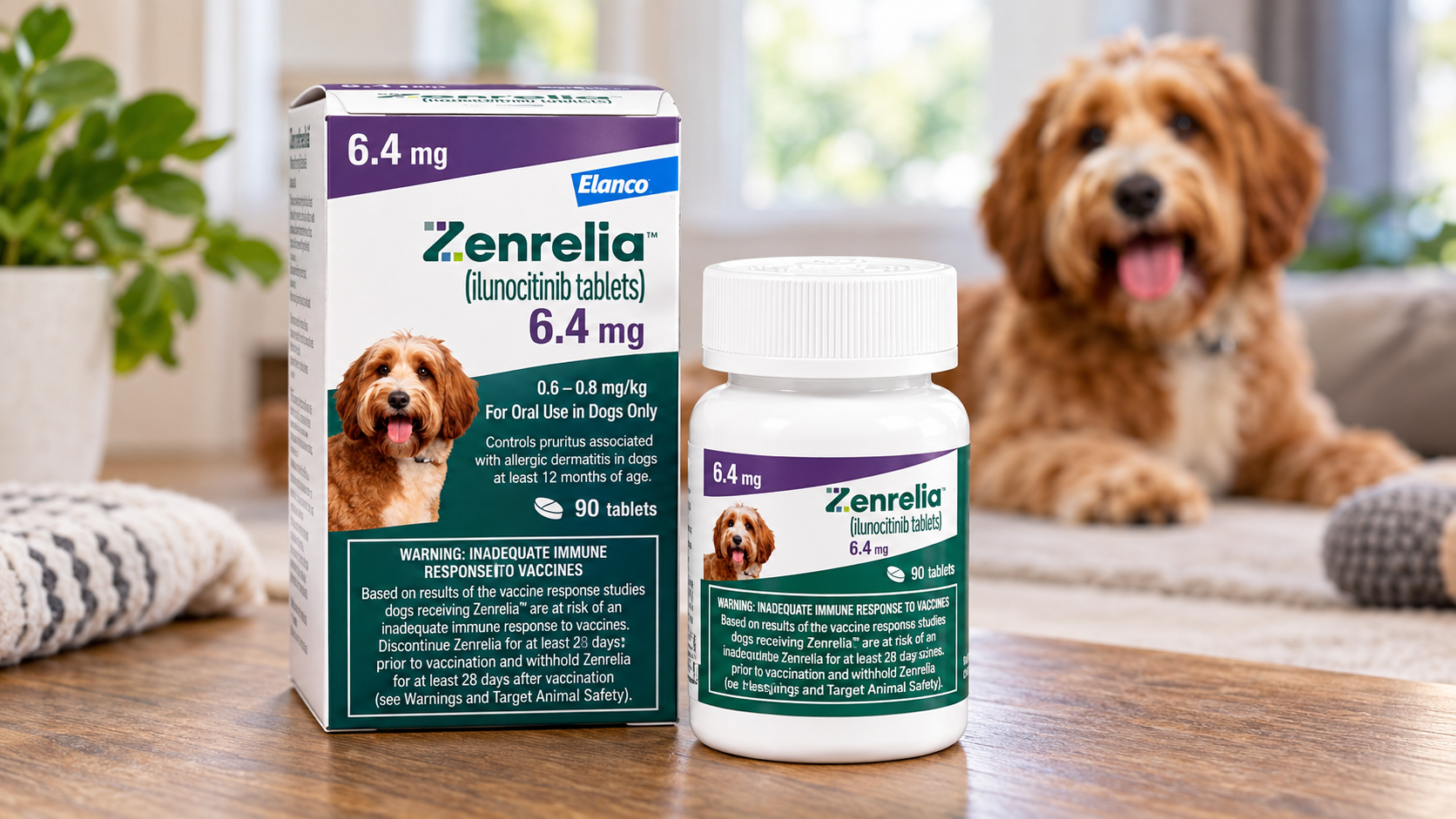
If your dog regularly scratches, licks, or develops irritated skin because of allergies, your veterinarian may discuss prescription treatment options. Zenrelia (ilunocitinib tablets) for Dogs is a once-daily prescription medication designed to control itching associated with allergic dermatitis and control atopic dermatitis in dogs at least 12 months old.
Before filling a prescription, you should understand how Zenrelia works, its dosing schedule, potential adverse reactions, vaccination precautions, and factors that can determine if it suits your dog.
What Is Zenrelia (ilunocitinib tablets) for Dogs?
Zenrelia is an FDA-approved dog allergy medication containing ilunocitinib. It was approved in the United States in September 2024 for dogs at least 12 months of age.
Ilunocitinib is a non-selective Janus kinase inhibitor. JAK enzymes participate in signaling pathways associated with itching, inflammation, allergies, immune function, and other biological processes. By inhibiting relevant JAK-dependent signals, Zenrelia can help control allergy-related itching and skin inflammation.
Zenrelia is not an antihistamine or corticosteroid. It requires a veterinarian's prescription and should be given according to the prescribed dosage and treatment schedule.
What Conditions Does Zenrelia Treat?
Zenrelia is indicated for two related problems:
- Pruritus, or itching, associated with allergic dermatitis
- Atopic dermatitis in dogs
Dogs with allergic skin disease can develop scratching, licking, chewing, redness, irritated skin, and skin lesions. Because similar symptoms can occur with parasites, infections, food reactions, and other conditions, veterinary evaluation is important before starting treatment. For dogs diagnosed with environmental allergies, Zenrelia may serve as a canine atopic dermatitis treatment when a veterinarian determines that its expected benefits fit the dog's medical history.
How Does Zenrelia Work?
Zenrelia contains ilunocitinib, which inhibits JAK-dependent signaling involved in itch and inflammatory responses. This makes the medication a JAK inhibitor for dogs rather than a steroid or traditional antihistamine.
Its mechanism targets signaling from several cytokines associated with allergic itching and inflammation. Reducing these signals can provide dog itching relief while helping control skin inflammation associated with allergic and atopic dermatitis.
Treatment still needs veterinary supervision because JAK signaling has functions beyond allergic inflammation, including roles connected with immune defense and blood-cell production.
How Is Zenrelia Given?
Zenrelia is administered orally once daily. You can give it with or without food. The FDA-approved dose is 0.6 to 0.8 mg of ilunocitinib per kilogram of body weight once daily.
Your veterinarian determines the appropriate tablet strength and quantity according to your dog's weight.
In the United States, Zenrelia tablets are available in these strengths:
- 4.8 mg
- 6.4 mg
- 8.5 mg
- 15 mg
You should follow the prescription label rather than selecting a tablet strength yourself. Do not adjust the dose because your dog's symptoms improve or worsen without contacting your veterinarian.
What Should You Check Before Getting a Prescription?
Choosing a prescription allergy medicine for dogs involves looking beyond convenience. Your dog's age, current health, vaccination schedule, infection history, and other medications can affect the treatment decision.
Before Zenrelia is prescribed, discuss these points with your veterinarian:
- Your dog's age and weight
- Current allergy symptoms
- Recent and upcoming vaccinations
- Current or recurring infections
- Previous skin infections or demodicosis
- History of neoplasia
- Current prescription drugs and supplements
- Previous allergy treatments
- Pregnancy, breeding, or lactation status
Zenrelia should not be used in dogs younger than 12 months or dogs with a serious infection.
Its safe use has not been evaluated in breeding, pregnant, or lactating dogs. Concurrent use with glucocorticoids, cyclosporine, or other systemic immunosuppressive agents has not been evaluated either.
What Should You Know About Vaccinations?
Vaccination timing is one of the biggest factors to discuss before starting Zenrelia. The current U.S. prescribing information carries a boxed warning concerning an inadequate immune response to vaccines.
Dogs should be up to date on vaccinations before beginning treatment. Current prescribing guidance states that Zenrelia should be discontinued for at least 28 days to three months before vaccination and withheld for at least 28 days afterward.
Your veterinarian should determine the appropriate timing based on your dog's vaccination needs and treatment plan. This matters particularly if your dog has an upcoming routine vaccination appointment.
Tell your veterinarian that your dog receives Zenrelia before any vaccine is administered.
What Are the Potential Side Effects?
The most commonly reported adverse reactions during clinical studies were:
- Vomiting
- Diarrhea
- Lethargy
Zenrelia can suppress aspects of immune function, so dogs receiving treatment should also be monitored for infections. Clinical studies observed new benign and malignant neoplastic conditions in treated dogs.
The prescribing information advises veterinarians to assess treatment risks and benefits for dogs with histories of recurrent serious infections, recurrent demodicosis, or neoplasia. Changes involving hematocrit, hemoglobin, and red blood cell counts have also been identified in the safety information.
How Does Zenrelia Compare With Other Allergy Treatments?
Dog allergy treatments can work through different mechanisms. Some target JAK signaling, while others use monoclonal antibodies, corticosteroids, antihistamines, or other approaches.
Zenrelia has several practical characteristics that may influence your decision:
- It is given once daily.
- It is an oral tablet.
- It can be administered with or without food.
- It does not require a loading or tapering schedule under labeled use.
- It is intended for dogs at least 12 months old.
- It requires a veterinary prescription.
- Vaccination timing needs planning.
- Ongoing monitoring may be appropriate for some dogs.
A comparison should focus on your dog's diagnosis and medical history rather than selecting a medication solely because it is newer or easier to administer.
Dog allergy treatments can work through different mechanisms. Some target JAK signaling, while others use monoclonal antibodies, corticosteroids, antihistamines, or other approaches. Zenrelia has several practical characteristics that may influence your decision: It is given once daily. It is an oral tablet. It can be administered with or without food. It does not require a loading or tapering schedule under labeled use. It is intended for dogs at least 12 months old. It requires a veterinary prescription. Vaccination timing needs planning. Ongoing monitoring may be appropriate for some dogs. A comparison should focus on your dog's diagnosis and medical history rather than selecting a medication solely because it is newer or easier to administer.
According to Elanco's U.S. veterinary product information, Zenrelia can be used for long-term maintenance therapy when clinically appropriate. Using ilunocitinib for dogs over an extended period still calls for veterinary oversight.
Your veterinarian may periodically assess skin symptoms, infections, general health, treatment response, and other findings based on your dog's individual risk factors. Allergic skin disease can change over time, so the treatment that works during one period may need adjustment later.
What Should You Ask Your Veterinarian Before Buying Zenrelia?
A veterinary appointment gives you a chance to determine if Zenrelia fits your dog's condition rather than focusing only on obtaining the prescription.
Useful questions include:
- What is causing my dog's itching?
- Has an infection been ruled out or treated?
- Is my dog old enough for Zenrelia?
- Are vaccinations currently up to date?
- Does an upcoming vaccine affect treatment timing?
- Which tablet strength does my dog need?
- How long should treatment continue?
- Which adverse reactions should prompt a call?
- Does my dog need follow-up examinations or testing?
- Could current medications interact with the treatment plan?
These questions can help you compare Zenrelia with other veterinary allergy treatments based on practical factors specific to your dog.
Is Zenrelia Worth Discussing With Your Vet?
Zenrelia provides another prescription option for dogs dealing with itching from allergic dermatitis or atopic dermatitis. Once-daily oral administration can make the treatment schedule straightforward, and clinical studies supported its effectiveness for its approved indications.
Still, convenience should not be the only deciding factor. Age restrictions, infection risks, vaccination timing, medical history, other medications, and potential adverse reactions all deserve attention.
If your dog has persistent allergic itching, ask your veterinarian about the cause first. A confirmed diagnosis and review of your dog's health history can help determine if Zenrelia fits the treatment plan.