How to Use the Super Bird Creations Rope Bungee Bird Perch Safely
This post may contain affiliate links. Please read ourdisclosure policy
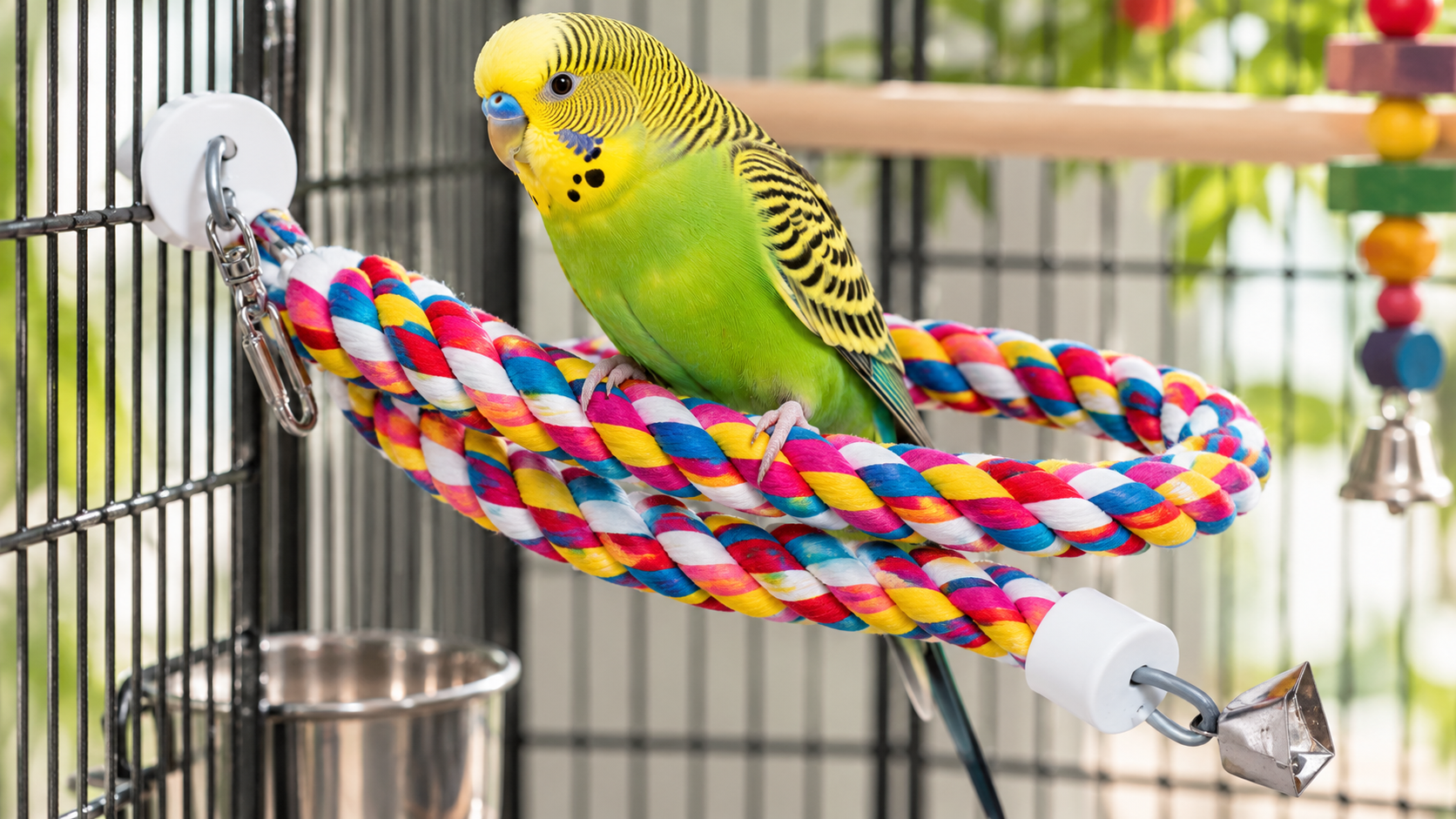
Choosing the right perch for your pet bird can make a noticeable difference in how comfortably it moves, rests, and plays inside its cage. The Super Bird Creations Rope Bungee Bird Perch is a flexible hanging accessory designed to give birds an alternative to traditional stationary perches.
Its bendable rope construction and spring-like shape make it an interesting choice for bird owners seeking additional climbing and activity opportunities. However, before purchasing, you should understand its construction, maintenance requirements, safety considerations, and suitability for your bird.
Super Bird Creations Rope Bungee Bird Perch: What Makes It Worth Considering?
The Super Bird Creations Rope Bungee Bird Perch is a hanging rope accessory intended for pet birds that enjoy climbing, gripping, and exploring different cage surfaces. Unlike a conventional wooden perch, its flexible construction allows movement as your bird changes position.
The rope can also provide a different gripping texture from natural branches or manufactured wooden perches.
Its main characteristics include:
- Flexible rope construction: Provides a bendable surface that can move under your bird's weight.
- Bungee-style design: Creates a hanging climbing and perching area.
- Textured gripping surface: Allows birds to grip the rope with their feet.
- Space-conscious installation: Can add vertical activity space inside a suitable cage.
- Activity opportunities: Encourages climbing, balancing, and exploration.
- Companion accessory: Can be used alongside natural wooden perches and other suitable cage furnishings.
Exact dimensions, materials, attachment hardware, and recommended bird sizes should be checked against the specific product listing before purchase.
How Does a Rope Bungee Perch Work?
A rope bungee perch for birds provides a suspended surface that can move as your bird climbs or changes position. Depending on the product's installation and your bird's weight, the rope may bend, sway, or change shape during use.
This movement can create opportunities for activity that differ from those provided by stationary perches.
Flexible Movement and Climbing
Birds naturally use their feet and beaks to move between branches and other surfaces. A flexible rope accessory can support similar climbing behavior in a controlled indoor environment. Your bird may use the perch to:
- Climb between different cage levels.
- Change gripping positions.
- Explore a hanging surface.
- Reach nearby toys or activity areas.
- Rest temporarily between activities.
However, movement alone does not guarantee improved fitness or foot health. Appropriate perch diameter, positioning, and the bird's individual physical condition remain important.
Texture and Foot Contact
Rope provides a different surface texture from wood, plastic, or mineral perches. Some birds may enjoy gripping the rope, while others may prefer a stable natural branch.
A variety of appropriately sized natural wooden perches should remain available so your bird can change its foot position throughout the day.
Key Features and Practical Benefits
1. Flexible Construction for Cage Activity
The bungee-style construction allows birds to interact with a moving surface. For active birds, this can provide another place to climb and explore during the day.
However, the perch should be installed securely and positioned away from hazards.
2. Alternative Gripping Surface
Rope perches can provide additional surface variety within a bird enclosure. A flexible bird cage perch may be particularly interesting for birds that enjoy climbing between different heights.
Nevertheless, rope should supplement appropriate natural branches rather than replace every other perch.
3. Vertical Cage Space
Hanging accessories can help you use the vertical space inside a cage. You can position the bungee perch near suitable activity areas while preserving enough room for your bird to move freely.
Avoid placing it where your bird could become trapped between the rope and cage bars.
4. Opportunities for Exploration
Some birds are naturally curious about new cage accessories. The hanging design may encourage investigation, especially when introduced gradually.
However, individual reactions vary. A cautious bird may need several days to become comfortable with a new object.
5. Compatibility With Other Accessories
The perch can complement appropriately selected cage furnishings, including:
- Natural wooden branches.
- Bird-safe climbing accessories.
- Foraging toys.
- Swings.
- Suitable ladders.
- Stationary resting perches.
The goal is to create an enclosure with different activities while maintaining safe movement and adequate open space.
Which Birds May Be Suitable for This Perch?
Suitability depends on the perch's actual dimensions, rope diameter, hardware, and the individual bird's size and behavior.
Small Pet Birds
Smaller birds may use a properly sized hanging rope accessory for climbing or brief resting periods. However, you should verify that the rope diameter allows a comfortable grip and that the accessory does not swing excessively.
Medium-Sized Birds
Some medium-sized parrots may enjoy climbing on a suspended rope. Before installation, check the manufacturer's size recommendations and the strength of the mounting hardware.
Larger Parrots
Larger birds can exert considerable force when pulling, chewing, or climbing. You should confirm that the specific product is designed for the bird's size and strength.
A rope accessory intended for small birds should not be assumed suitable for a large parrot.
Birds With Mobility Difficulties
Birds experiencing balance problems, foot injuries, or reduced mobility may need stable, accessible perches instead of suspended accessories. An avian veterinarian can help determine an appropriate cage arrangement.
Is the Rope Material Safe for Pet Birds?
Material safety is one of the most important factors when evaluating a cotton rope bird perch or any other fibrous bird accessory. Although rope products are commonly used in bird enclosures, they require regular inspection.
Birds that chew or unravel rope may be exposed to loose fibers that can cause problems.
Potential Rope Hazards
Watch for the following:
- Fraying: Loose strands can become tangled around toes or nails.
- Fiber ingestion: Swallowed fibers may contribute to digestive obstruction.
- Loose attachments: Damaged connectors can create falling or entrapment hazards.
- Contamination: Food residue and droppings can make rope difficult to keep hygienic.
- Excessive chewing: Some birds focus on destroying rope rather than using it for climbing.
If your bird begins pulling apart or swallowing fibers, remove the accessory immediately.
How to Reduce Safety Risks
Inspect the rope frequently, particularly around attachment points and areas that receive heavy chewing. Replace the accessory when fibers begin to separate, attachments loosen, or the rope becomes difficult to clean.
Even when a product is marketed for birds, regular monitoring remains necessary.
Super Bird Creations Rope Bungee Bird Perch vs. Other Perch Types
When choosing bird cage accessories for parrots, comparing different perch designs can help you create a suitable enclosure.
Rope Bungee Perch
- Best suited for: Supplemental climbing and activity.
- Main advantage: Flexible, suspended construction.
- Potential limitation: Fraying, fiber ingestion, and entanglement risks.
- Maintenance: Frequent inspection and cleaning.
- Buying consideration: Verify size, materials, and attachment security.
Natural Wooden Perch
- Best suited for: Everyday resting and general cage use.
- Main advantage: Natural shape and varied gripping positions.
- Potential limitation: Requires appropriate wood selection and regular cleaning.
- Maintenance: Inspect for damage and contamination.
- Buying consideration: Choose bird-safe wood and appropriate branch diameters.
Plastic Perch
- Best suited for: Certain cage arrangements where a washable accessory is useful.
- Main advantage: Usually easy to wipe clean.
- Potential limitation: Uniform diameters and smooth surfaces may provide limited foot-position variation.
- Maintenance: Regular washing and damage checks.
- Buying consideration: Avoid sharp edges and unsuitable dimensions.
Mineral or Abrasive Perch
- Best suited for: Limited supplemental use when appropriate.
- Main advantage: Some designs provide an abrasive surface.
- Potential limitation: Rough surfaces can irritate feet, particularly with prolonged contact.
- Maintenance: Clean and inspect regularly.
- Buying consideration: Avoid using an abrasive perch as the primary resting location.
What Should You Check Before Buying?
Before purchasing the Super Bird Creations Rope Bungee Bird Perch, evaluate the following factors.
Product Dimensions
Check the total length, rope thickness, and attachment requirements. A perch that is too thick or thin may be uncomfortable for your bird to grip.
Bird Size Compatibility
Review the manufacturer's recommendations and compare them with your bird's physical size and behavior. Do not rely exclusively on general labels such as small, medium, or large.
Material Composition
Check the stated rope material and whether the product contains any additional components. The manufacturer's listing should identify relevant construction details.
Attachment Hardware
Examine how the accessory connects to the cage. The mounting points should remain secure during climbing and should not expose your bird to sharp edges or accessible gaps that could trap a toe or beak.
Cleaning Requirements
Rope can retain moisture, food particles, and other contaminants. Before buying, confirm whether the manufacturer's cleaning instructions fit your regular cage-maintenance routine.
Your Bird's Chewing Habits
Some birds chew rope aggressively. If your bird routinely shreds and swallows fibers, a non-rope climbing accessory may be the safer choice.
How Much Does the Super Bird Creations Rope Bungee Bird Perch Cost?
The price depends on the product variation, retailer, and availability. A verified current price for the exact item has not been established here, so a specific dollar amount would be unreliable.
When comparing listings, review:
- The listed price in US dollars.
- The exact product size and variation.
- Shipping costs.
- Seller return policies.
- Material specifications.
- Customer feedback concerning durability.
- Replacement costs if your bird frequently damages rope accessories.
A lower initial price may not represent good value if the accessory needs frequent replacement.
How to Install a Hanging Bird Perch Safely
Proper installation helps reduce unnecessary movement and prevent avoidable cage hazards.
Choose an Appropriate Position
Select an area with sufficient clearance from cage walls, doors, feeding stations, and other accessories. Avoid placing the rope directly above food or water bowls.
Secure the Attachment Points
Use the attachment hardware as directed by the manufacturer. Check that connectors cannot easily loosen or open during use.
Test the Installation
Before allowing your bird to climb on the accessory, inspect the mounting points and check for excessive movement. The perch should remain securely attached.
Introduce the Accessory Gradually
Some birds approach unfamiliar objects immediately, while others need time. Allow your bird to inspect the accessory without forcing interaction.
Monitor Early Use
Observe how your bird climbs, grips, and moves around the perch. If it appears unstable, frightened, or likely to become tangled, remove or reposition the accessory.
Cleaning and Maintenance Tips
A hanging bird rope perch needs consistent care because fibers can retain dirt and moisture.
Inspect the Rope Regularly
Look for frayed ends, separated strands, damaged connectors, and signs of excessive chewing.
Remove Visible Contamination
Follow the manufacturer's cleaning instructions and remove food residue or droppings promptly. Avoid using cleaning chemicals that are unsafe for birds.
Allow Complete Drying
If washing is permitted, ensure the rope dries completely before returning it to the cage. Persistent moisture can encourage microbial growth.
Replace Damaged Accessories
Replace the perch when its structural condition becomes questionable. Do not attempt to repair damaged rope using adhesives, tape, or exposed wire.
Keep Other Perches Available
Your bird should have access to suitable stable resting surfaces while the rope accessory is being cleaned or replaced.
Pros and Cons of the Super Bird Creations Rope Bungee Bird Perch
Potential Advantages
- Provides a flexible climbing surface.
- Adds an alternative texture to the enclosure.
- May encourage exploration and movement.
- Can use vertical cage space.
- Complements suitable natural wooden perches.
- May interest birds that enjoy hanging accessories.
Potential Disadvantages
- Loose rope fibers can create safety hazards.
- Not appropriate for every bird's chewing habits.
- Requires regular inspection.
- May be difficult to clean thoroughly.
- Moving surfaces may not suit birds with balance difficulties.
- Product size and attachment compatibility must be checked.
These factors should be weighed against your bird's behavior and enclosure setup.
Super Bird Creations Rope Bungee Bird Perch: Size and Compatibility
The Super Bird Creations Rope Bungee Bird Perch may be a practical addition to a suitable bird enclosure when your pet enjoys climbing and interacting with suspended accessories. Its flexible construction provides a different experience from stationary wooden perches, and it may help introduce additional activity opportunities.
However, its value depends on your bird's size, behavior, and willingness to use rope safely. Birds that frequently shred or ingest fibers may be better served by alternative climbing equipment. Before purchasing, confirm the manufacturer's product specifications, evaluate the attachment hardware, and plan for regular maintenance.
For the right bird and cage arrangement, this accessory can serve as a supplemental climbing surface while natural wooden perches continue to provide stable everyday resting locations.