Why Coop Size Matters When Buying the Prevue Pet Products Chicken Coop
This post may contain affiliate links. Please read ourdisclosure policy
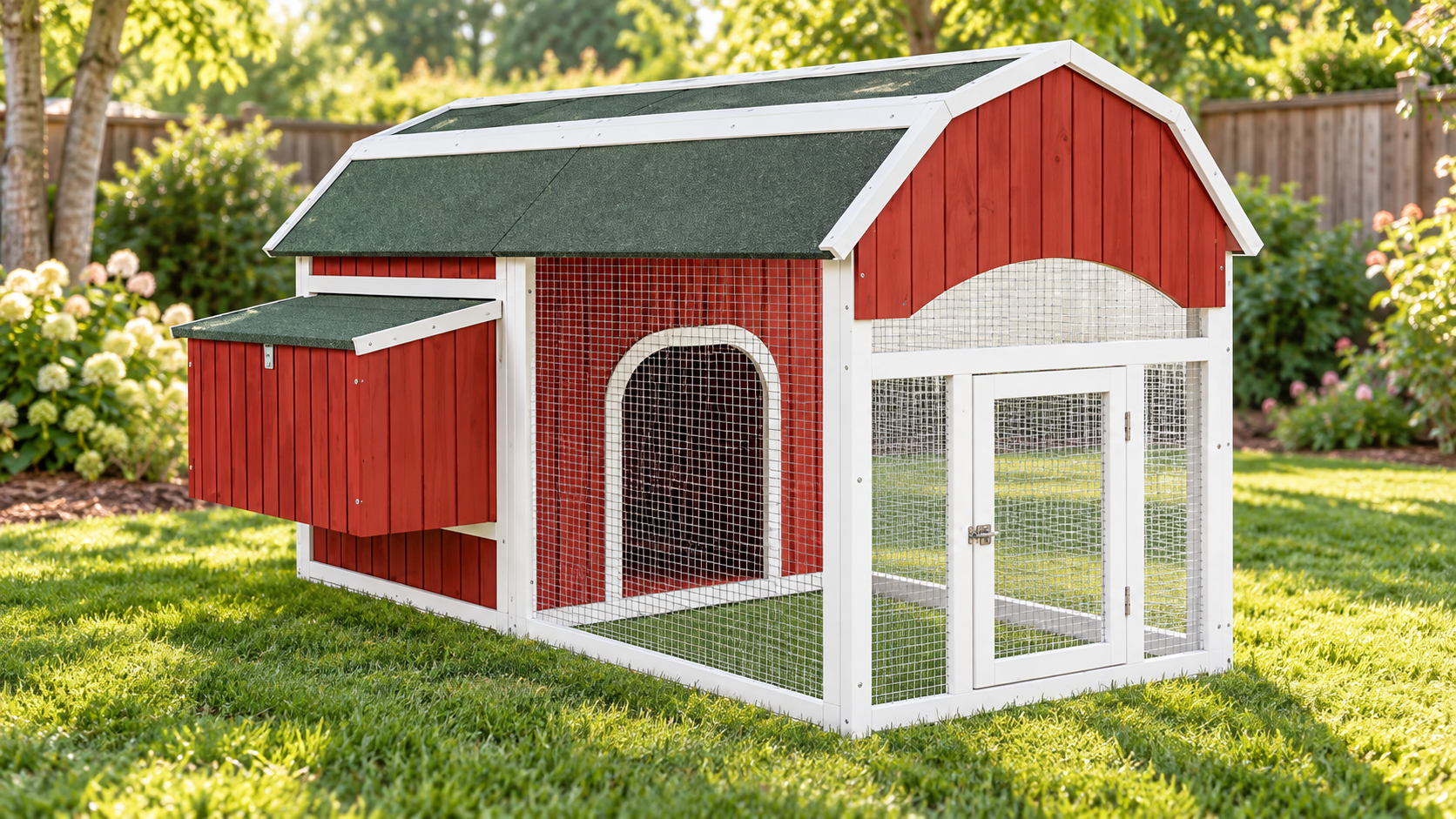
Keeping a small flock at home requires housing that gives your chickens enough space while making daily care manageable. The Prevue Pet Products Chicken Coop is designed for small backyard flocks, with an enclosed run, roosting area, nesting spaces, and several access points for cleaning and egg collection.
The Model 465 coop accommodates four to six hens and measures 71 inches long, 45 inches wide, and 39 inches high when assembled. Its barn-inspired design combines fir wood, galvanized wire mesh, and an asphalt-covered roof.
If you are comparing ready-made coops before buying, its capacity, access design, cleaning requirements, and weather protection deserve close attention.
What Does the Prevue Pet Products Chicken Coop Include?
The Prevue Pet Products Chicken Coop combines sleeping, nesting, and protected activity areas in one structure. Its elevated enclosed section provides a place for your birds to roost, while the lower protected area gives them access to the ground.
For anyone searching for a chicken coop for 4 to 6 hens, the stated capacity makes this model suitable for a relatively small flock. Actual comfort can still depend on your chickens' size, temperament, and how much additional free-ranging space they receive.
Important features include:
- Capacity for four to six hens
- 71 × 45 × 39-inch overall dimensions
- 67 × 30 × 36-inch interior space
- Protected lower chicken run
- Two roosting bars
- Three nesting spaces
- Removable nest box
- Two removable floor panels
- Ventilated screen window
- Fir-wood body
- Plywood roof covered with asphalt shingles
- 1/2-inch galvanized wire mesh
- Front and side access points
- Non-toxic, water-based stain
These features give you a useful starting point for comparing the coop against other models in the same general size and price category.
Is It Suitable for a Backyard Flock?
As a backyard chicken coop, Model 465 is aimed at owners who want several important housing functions contained within one structure. Its footprint can work in yards where building a large permanent poultry house may not be practical.
Before purchasing, measure the area where you plan to place it. You need room for the 71-by-45-inch structure along with enough surrounding clearance to reach the doors, nest box, and removable sections.
Placement matters too. A firm, reasonably level surface can help keep the structure stable and make routine maintenance easier.
How Much Space Does the Run Provide?
The protected run measures approximately 35 inches long, 30 inches wide, and 38 inches high internally. Chickens can access the ground while remaining inside the enclosed structure.
A chicken coop with run can be convenient when you cannot allow birds to roam freely throughout your property. Still, the built-in run should not automatically be treated as all the activity space your flock may need.
Flock size, breed, local conditions, and your daily management routine can affect how much additional space is appropriate.
Construction and Weather Protection
The wooden chicken coop uses fir for its main body and plywood for the roof. Asphalt shingles cover the roof, while galvanized wire forms the mesh sections.
That construction provides a practical balance between an enclosed sleeping area and ventilation. The red barn-style finish also gives the coop a traditional appearance without affecting its basic function.
Wood does require ongoing care outdoors. Moisture, prolonged rain, ground contact, and changing temperatures can shorten the service life of wooden poultry housing. Regular inspections can help you catch damaged wood, loose hardware, worn mesh, or other problems before they become larger repairs.
Is the Coop Waterproof?
You should not treat the coop as completely waterproof. Its asphalt roof helps protect the interior from weather, yet the wooden structure still needs protection from persistent damp conditions.
Choose a location with suitable drainage and inspect the wood periodically. Additional poultry-safe weather protection may be useful depending on your climate and placement.
Nesting and Egg Collection
The adjacent nest box has three nesting slots measuring approximately 9 to 10 inches wide. Its lid opens for egg collection, and the entire nest box can be removed when cleaning is needed.
This chicken coop with nesting box design gives you direct access to eggs without requiring you to enter the primary roosting section every time. The removable design can help with routine maintenance too.
Bedding, feathers, droppings, and broken egg material can accumulate inside nesting areas, so easy access is worth checking when comparing coops.
Cleaning and Everyday Maintenance
Cleaning access can make a noticeable difference once you start using a coop every day. Model 465 includes two removable floor panels and a large side-access door that provides access to the roosting section. The manufacturer recommends cleaning the coop as needed with a soft damp cloth and mild soap, followed by thorough drying. For routine upkeep, you can:
- Remove soiled bedding regularly.
- Check nesting areas for broken eggs or excessive waste.
- Clean removable floor sections when needed.
- Inspect mesh and door hardware.
- Check the wood for moisture damage.
- Make sure doors and bolt locks continue to close correctly.
- Allow cleaned areas to dry thoroughly before adding fresh bedding.
Security Features Worth Checking
Any outdoor chicken enclosure needs to account for animals that may try to enter the coop. Model 465 uses 1/2-inch galvanized wire mesh along with several door closures.
The front access door has an attached bolt lock, while the larger side-access door uses two bolt-lock closures. The nest box also has a lockable access lid.
Still, predator risks vary considerably by location. Before relying on any prefabricated coop, inspect every door, corner, mesh connection, and ground-level opening after assembly.
Additional reinforcement may make sense if your area has persistent predators or animals capable of digging underneath enclosures.
Assembly and Placement
The coop requires assembly. Before starting, confirm that all panels, fasteners, hardware, and other components are present. Choose the final location before assembly when practical.
Moving a fully assembled wooden structure can require another person and may put unnecessary stress on joints or panels.
You should also think about:
- Ground drainage
- Shade during hot weather
- Exposure to heavy rain
- Accessibility for cleaning
- Space for egg collection
- Distance from property boundaries
- Local rules governing backyard poultry
Planning these details before installation can save considerable adjustment later.
How Much Does the Prevue Pet Products Chicken Coop Cost?
Pricing changes by retailer, availability, and promotions. Recent U.S. retail pricing has placed this coop at roughly $370, while listed regular or suggested prices can be considerably higher.
Because chicken coops are relatively large products, shipping costs and return policies can affect the final purchase price. Check the total delivered cost instead of comparing the product price alone.
Pros and Potential Drawbacks
Pros
- Designed for a small flock of four to six hens
- Includes a protected run
- Three nesting spaces
- Two roosting bars
- Removable nest box
- Removable floor panels
- Several access doors
- Ventilated roosting section
- Asphalt-covered roof
- Replacement parts may be available from the manufacturer
Potential Drawbacks
- Wood needs periodic inspection and maintenance
- Assembly is required
- Built-in run space may be limited for birds kept enclosed for long periods
- Additional predator protection may be appropriate in some locations
- Large assembled footprint requires planning
- Retail pricing can vary substantially
Frequently Asked Questions
How many chickens can the Prevue coop hold?
The manufacturer states that Model 465 accommodates four to six hens. Your flock's breed and size, along with access to additional outdoor space, should factor into your final stocking decision.
Does it have nesting boxes?
Yes. The removable nest box contains three nesting spaces and has a lid that opens for egg collection.
Does it include a chicken run?
Yes. The lower section includes a protected run with galvanized wire mesh.
Is there ventilation?
Yes. The roosting section has a ventilated screen window designed to provide airflow and light.
Is assembly required?
Yes. The coop arrives as components that need to be assembled according to the manufacturer's instructions.
Can you clean the nesting area separately?
Yes. The nest box can be removed, giving you better access during cleaning.
What Should You Check Before Buying?
- Stated capacity: 4–6 hens
- Overall dimensions: 71 × 45 × 39 inches
- Interior dimensions: 67 × 30 × 36 inches
- Run interior: 35 × 30 × 38 inches
- Nesting spaces: 3
- Roosting bars: 2
- Wire spacing: 1/2 inch
- Main body material: Fir wood
- Roof: Plywood with asphalt covering
- Floor access: 2 removable panels
- Nest box: Removable
These specifications make it easier to compare the Prevue model directly with similarly sized prefabricated coops.
Is the Prevue Pet Products Chicken Coop Worth Buying?
The Prevue Pet Products Chicken Coop can make sense if you need ready-made housing for a small flock and prefer a design that combines nesting, roosting, and enclosed ground access. Its removable cleaning components, three nesting spaces, ventilation, and multiple access doors address several everyday poultry-care tasks.
The main tradeoffs are typical of prefabricated wooden coops: you need to assemble the structure, monitor outdoor wear, and determine if the included run provides enough space for your management setup. Measure your available area first, compare the usable dimensions with your flock's needs, and account for weather and predator conditions in your location.
Those checks will tell you far more about suitability than appearance alone.