What Backyard Chicken Owners Should Know About Premo Guard Poultry Spray
This post may contain affiliate links. Please read ourdisclosure policy
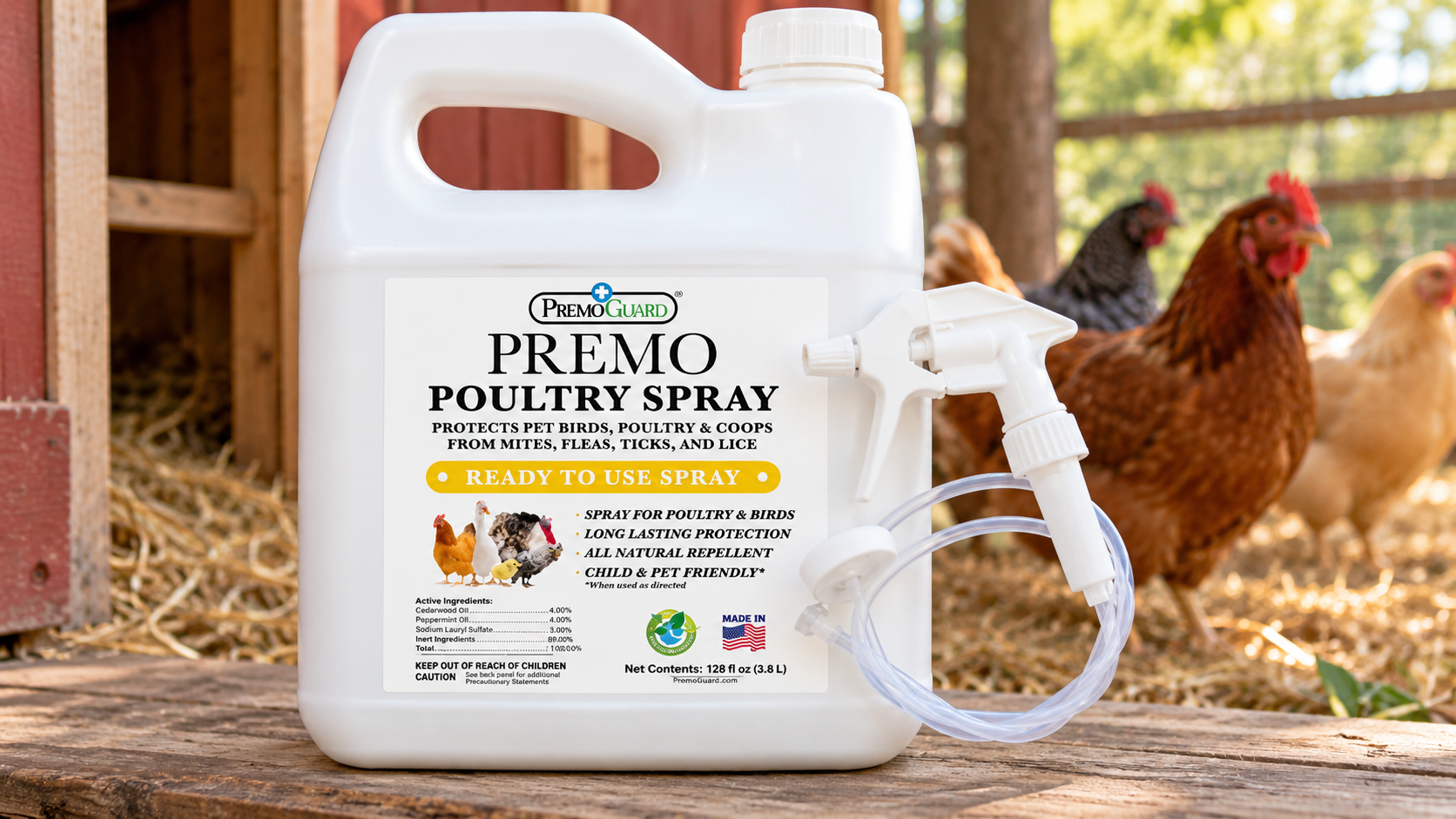
Keeping mites, lice, fleas, ticks, and other biting pests away from your flock can take regular work. Premo Guard protection for chickens gives you a plant-based spray designed for direct application on poultry and common coop areas.
It uses clove oil and cottonseed oil as active ingredients and can be applied to chickens, chicks, nesting boxes, roosts, runs, and other poultry spaces. If you want an alternative to conventional pesticide-based treatments, this product may fit your flock-care routine.
What Is Premo Guard Protection for Chickens?
Premo Guard protection for chickens is a ready-to-use poultry spray made to kill and help prevent common external pests. The manufacturer lists mites, lice, fleas, ticks, flies, and several specific mite species among its targeted pests.
You can spray it directly on poultry and use it around coops, pens, roosts, nest boxes, and runs. One of its main selling points is its plant-based formula. The active ingredients are clove oil at 0.05% and cottonseed oil at 0.05%.
Other listed ingredients include glycerin, myristic acid, potassium oleate, potassium stearate, soap, and water.
Quick Product Details
- Product type: Ready-to-use poultry pest spray
- Active ingredients: Clove oil 0.05% and cottonseed oil 0.05%
- Target pests: Mites, lice, fleas, ticks, flies, and other listed poultry pests
- Application areas: Birds, coops, nesting boxes, roosts, pens, runs, and yards
- Suitable poultry: Chickens, chicks, hens, roosters, turkeys, ducks, geese, and other poultry
- Egg withdrawal: The manufacturer states no egg withdrawal period is required
- Available sizes: 16 fl oz, 32 fl oz, and 128 fl oz
- Current listed prices: About $24.97 for 16 oz, $35.97 for 32 oz, and $89.97 for 128 oz at the time checked
How Does Premo Guard Poultry Spray Work?
Premo Guard poultry spray is intended to kill external pests on contact while supporting ongoing pest prevention. According to the manufacturer, the formula targets multiple stages of the pest life cycle, including eggs, larvae, and adults.
This matters because treating visible pests alone may leave eggs or immature pests behind. Applying the product to both your birds and their environment gives you a broader treatment approach.
For an active outbreak, Premo Guard recommends applying the spray daily or every other day. For ongoing prevention, the company recommends weekly application and use during routine coop cleaning.
What Pests Can It Target?
External parasites can hide under feathers, around vents, near legs, inside nesting materials, and in cracks around your coop.
As a chicken mite treatment, Premo Guard is marketed for several types of mites, including northern fowl mites, chicken mites, red mites, roost mites, scaly leg mites, depluming mites, feather mites, quill mites, and other listed varieties. It is also intended for lice, fleas, ticks, chiggers, and flies.
That broad target list can be useful when you know external parasites are present but have difficulty identifying the exact species.
Can You Apply It Directly to Chickens?
Yes. The manufacturer states that the spray can be applied directly to chickens and other poultry. It is marketed as suitable for chicks, hens, roosters, ducks, turkeys, geese, and pet birds.
As with any poultry pest control product, follow the label directions carefully. Shake the bottle before application and avoid using a greater amount simply because an infestation appears severe.
Proper coop sanitation should remain part of your pest-management routine.
Can You Use It Inside the Chicken Coop?
Premo Guard is intended for both birds and their surroundings. You can apply it around roosts, nesting boxes, pens, runs, poultry houses, and other areas where pests may hide.
This makes it useful as a chicken coop mite spray because mites can remain in cracks, bedding areas, roosting spaces, and other surfaces after you treat the birds. For better control, clean heavily soiled areas and remove dirty bedding as needed.
Treating your flock without addressing the environment can leave hiding places for surviving pests.
Does Premo Guard Require an Egg Withdrawal Period?
According to Premo Guard and the current Chewy listing, there is no egg withdrawal period associated with the poultry spray. The product is marketed for use without requiring you to discard eggs following treatment.
That can be practical for backyard keepers with laying hens because pest treatment does not require a planned interruption in egg collection under the manufacturer's directions.
What Are the Main Ingredients?
Premo Guard uses clove oil and cottonseed oil as its two listed active ingredients, each at a concentration of 0.05%. This plant-based poultry spray may interest you if you prefer a product that does not rely on permethrin as its active pest-control ingredient.
The full ingredient listing shown by Chewy includes:
- Clove oil — 0.05% active ingredient
- Cottonseed oil — 0.05% active ingredient
- Glycerin
- Myristic acid
- Potassium oleate
- Potassium stearate
- Soap
- Water
How Often Should You Apply Premo Guard?
Your application schedule depends on the reason you are using the product. During an outbreak, the manufacturer recommends daily or every-other-day applications.
Once the immediate pest problem is under control, weekly use can form part of your preventive routine. Premo Guard also recommends applying the product when cleaning the coop.
Regularly inspect your birds as well. Look around the vent, beneath the wings, around feather shafts, and near the legs for signs of parasites or irritation.
How Much Does Premo Guard Cost?
Pricing depends heavily on bottle size. At the time checked, Chewy listed the following one-time purchase prices:
- 16 fl oz: $24.97, about $1.57 per fluid ounce
- 32 fl oz: $35.97, about $1.13 per fluid ounce
- 128 fl oz: $89.97, about $0.71 per fluid ounce
The 16-ounce bottle may make sense if you have only a few birds or want to test the product before buying a larger quantity. The 32-ounce size lowers the cost per ounce, while the 128-ounce container has the lowest listed per-ounce cost and may suit larger flocks or repeated applications.
Prices and promotions can change, so check the retailer before purchasing.
Pros and Cons to Know Before Buying
Pros
- Can be applied directly to poultry
- Can also treat coops, roosts, nest boxes, pens, and runs
- Targets mites, lice, fleas, ticks, flies, and other listed external pests
- Uses clove oil and cottonseed oil as active ingredients
- No egg withdrawal period according to the manufacturer
- Available in three bottle sizes
- Suitable for several poultry species
- Larger bottles reduce the cost per fluid ounce
Cons
- Repeated application may be needed during active infestations
- The 16-ounce bottle has a relatively high cost per ounce
- Large flocks may use smaller bottles quickly
- You still need regular cleaning and environmental pest management
- Severe or persistent parasite problems may require veterinary guidance
Who May Find Premo Guard Useful?
This natural chicken mite control product may fit your needs if you keep backyard chickens and want one spray for both your birds and their living areas. It may be particularly practical when you:
- Keep a small or medium backyard flock
- Have laying hens and want a product with no stated egg withdrawal period
- Need to treat both birds and coop surfaces
- Prefer clove- and cottonseed-oil active ingredients
- Deal with recurring external parasite problems
- Want several bottle sizes to match your flock size
For a large flock or recurring infestation, compare the cost per ounce before ordering. The gallon-size container costs significantly less per ounce than the smaller bottles based on current listed pricing.
Frequently Asked Questions
Does Premo Guard kill chicken mites?
Premo Guard states that its poultry spray kills and helps prevent several mite species, including northern fowl mites, chicken mites, red mites, roost mites, and scaly leg mites.
Can you spray Premo Guard directly on chickens?
Yes. The product is designed for direct application to poultry as well as use around coops, nesting boxes, roosts, pens, and runs.
Is Premo Guard suitable for chicks?
The manufacturer lists the formula as suitable for chicks along with adult hens, roosters, and other poultry.
Do you need to throw away eggs after treatment?
The manufacturer states that there is no egg withdrawal period, meaning eggs do not need to be discarded solely because the product was used according to its directions.
What size should you buy?
A 16-ounce bottle can suit a small flock or initial purchase. The 32-ounce bottle provides a lower per-ounce cost, while the 128-ounce size currently provides the lowest listed cost per fluid ounce and can make sense for large flocks or frequent treatments.
Is Premo Guard Protection for Chickens Worth Checking Out?
Premo Guard can be worth comparing with other poultry parasite treatments if you want a ready-to-use spray that works on both birds and their surroundings. Its clove oil and cottonseed oil active ingredients, broad pest list, multiple bottle sizes, and lack of a stated egg withdrawal period make it a practical candidate for backyard flock care.
Your final choice should account for flock size, parasite severity, application frequency, and cost. Persistent infestations, unexplained feather loss, anemia, skin damage, or declining bird health warrant professional veterinary advice rather than relying solely on repeated home treatment.