Is the OverEZ Poultry Feeder Suitable for Your Backyard Flock?
This post may contain affiliate links. Please read ourdisclosure policy
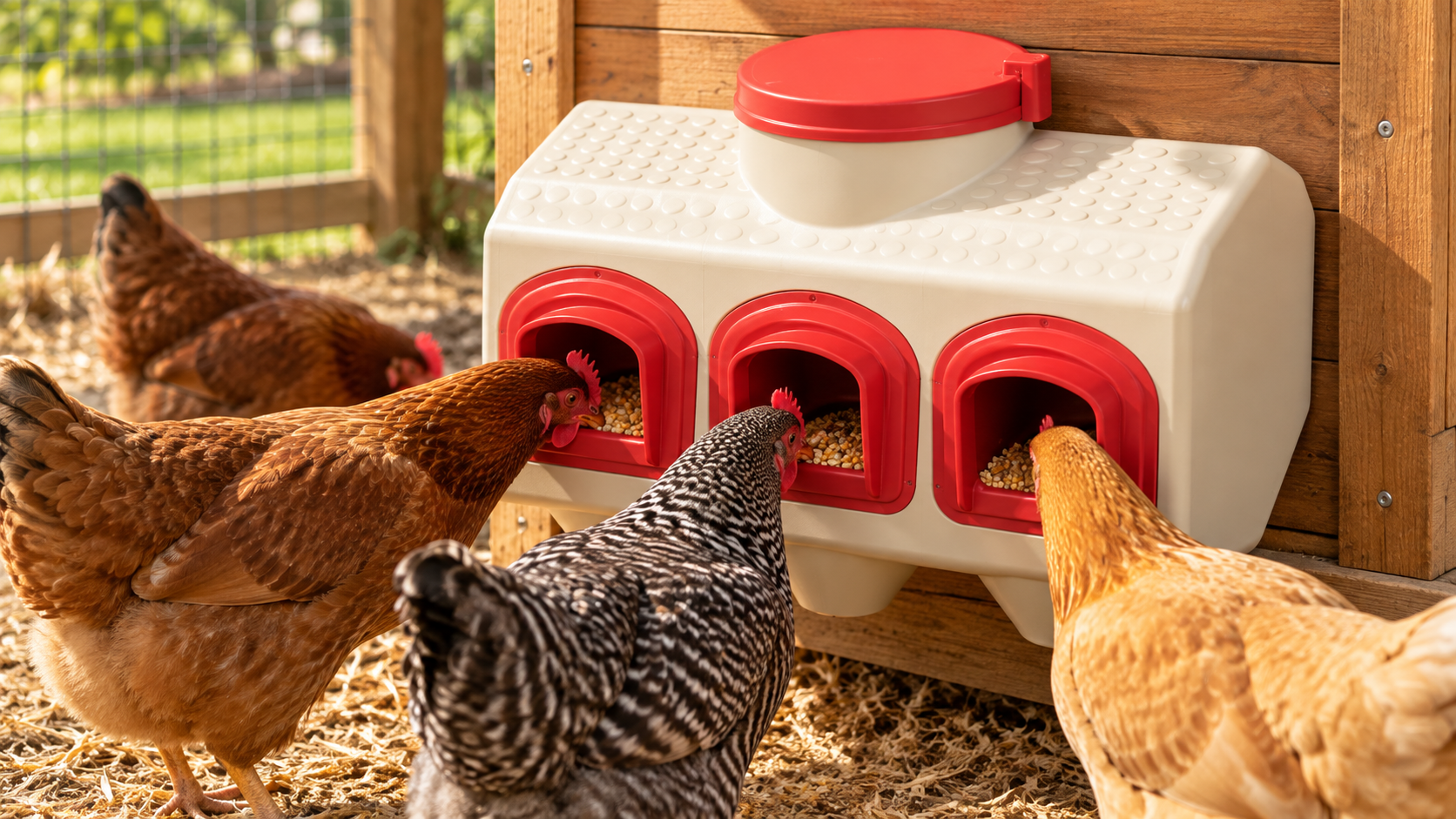
Keeping your chickens fed throughout the day can become a demanding routine, especially when you have several birds to care for. The OverEZ Poultry Feeder is designed to simplify feeding by storing a substantial amount of poultry feed in a covered container with accessible feeding ports.
If you're tired of constantly refilling traditional feeders, dealing with scattered feed, or worrying about food exposure, this feeder may be worth examining. However, before purchasing, you'll want to understand its capacity, construction, feeding system, maintenance requirements, and overall value.
What Is the OverEZ Poultry Feeder, and How Does It Work?
The OverEZ Poultry Feeder is a gravity-fed feeding container designed for backyard chickens and other compatible poultry. Its enclosed storage compartment holds dry feed, which moves toward the feeding openings as birds consume it.
Unlike traditional open feeding trays, the OverEZ design keeps most of the stored feed inside a protective enclosure. The feeder is particularly suitable for chicken owners who want to reduce daily refilling and maintain an organized feeding area.
Key Product Features
- Large feed storage: The commonly sold 50-pound model can hold up to 50 pounds of chicken feed.
- Gravity-fed operation: Feed moves toward the feeding ports without electricity or batteries.
- Covered storage: The enclosed design helps protect stored feed from environmental exposure.
- Multiple feeding ports: Several chickens can access feed through separate openings.
- Durable construction: The feeder uses a molded plastic body intended for routine poultry care.
- Simple refilling: A removable top provides access to the feed storage compartment.
- Reduced scattering: The feeding-port design can help limit feed being scratched or thrown outside the feeder.
Actual capacity, port configuration, and dimensions depend on the specific OverEZ model.
Why Choose a Large-Capacity Chicken Feeder?
One of the biggest advantages of a large-capacity chicken feeder is the convenience of storing several days' worth of food in one container. Traditional feeders may require frequent attention, particularly when you're raising a medium-sized flock.
A larger storage compartment can reduce the number of refills needed throughout the week.
How Long Can 50 Pounds of Chicken Feed Last?
Feed consumption depends on breed, age, weather, feed formulation, and other factors. As a general planning estimate, an adult laying hen may consume approximately 0.25 pounds of feed daily.
Using that estimate:
- 5 chickens: Approximately 40 days of feed.
- 10 chickens: Approximately 20 days of feed.
- 15 chickens: Approximately 13 days of feed.
- 20 chickens: Approximately 10 days of feed.
- 25 chickens: Approximately 8 days of feed.
These figures are estimates rather than guaranteed feeding durations. Spillage, moisture damage, and differences in individual consumption can affect the actual results. Even with a large feeder, you should check feed condition and water availability every day.
OverEZ Poultry Feeder Design and Construction
The physical design of a feeder matters because it affects how easily your chickens can access food and how much maintenance you'll need to perform. The OverEZ feeder uses a covered plastic housing with feeding openings positioned along its lower section.
Enclosed Feed Storage
The enclosed compartment helps separate stored food from the surrounding environment. This arrangement can help reduce exposure to dust, droppings, and debris compared with an uncovered feeding tray.
However, the feeder should not be treated as completely waterproof or pest-proof. Placement, lid condition, and regular inspection still matter.
Accessible Feeding Ports
The feeding ports allow chickens to reach the feed without entering the storage compartment. This arrangement may help prevent birds from scratching through the entire feed supply, which commonly happens with open containers.
However, birds may need time to become comfortable with unfamiliar feeding openings.
Plastic Body and Maintenance
The molded plastic housing is intended to withstand normal poultry feeding conditions. Unlike metal feeders, plastic does not rust. However, prolonged sunlight, impacts, and improper cleaning can still affect its condition.
Inspect the lid, openings, and container regularly for damage.
Can the OverEZ Poultry Feeder Help Reduce Feed Waste?
A waste-reducing poultry feeder can be a practical investment when feed regularly ends up on the ground. Chickens naturally scratch and peck while eating. With open feeding trays, this behavior can scatter food into bedding, dirt, or wet areas.
The OverEZ feeding-port design limits access to the stored feed, potentially reducing unnecessary scattering.
How the Design May Reduce Waste
- Controlled feeding access: Chickens reach food through designated openings rather than scratching through a large exposed supply.
- Enclosed storage: Most of the feed remains inside the container until birds consume it.
- Reduced contamination: The design can limit contact between stored feed and bedding or droppings.
- Less frequent handling: Larger storage capacity reduces the need to transfer feed every day.
The amount of feed saved will depend on your flock's behavior, feeder placement, and previous feeding arrangement. If you're currently using an open tray, you may notice a practical difference. However, no feeder can guarantee that every piece of feed will be consumed.
Is the OverEZ Feeder Suitable for Backyard Chickens?
A backyard chicken feeding system should support your flock's eating habits while fitting comfortably inside your available space. The OverEZ feeder may work well for owners managing several adult chickens, particularly when daily feeding time is limited.
Best Situations for Using This Feeder
Small backyard flocks If you have a few chickens, the feeder can store food for an extended period. However, you should avoid leaving feed inside so long that freshness becomes a concern. Medium-sized flocks For households raising approximately 10–20 adult chickens, the larger capacity may reduce routine refilling. Covered chicken runs Positioning the feeder inside a protected feeding area can help reduce direct exposure to rain and standing water. Owners with busy schedules A larger feeder can make daily care easier by reducing refilling frequency, although your chickens still need daily checks.
When Might It Be Less Suitable?
The feeder may not be the ideal choice if:
- You raise very young chicks that cannot comfortably access the feeding openings.
- You have limited space inside your coop.
- Your flock requires several different feed formulations.
- Your feeding area is regularly exposed to heavy rainfall.
- You need a feeder specifically designed to prevent rodents from accessing food.
For chicks or birds with special feeding requirements, use equipment appropriate for their age and size.
How Does the OverEZ Poultry Feeder Compare With Traditional Feeders?
When comparing a gravity-fed chicken feeder with a traditional feeding tray, the most important differences involve storage capacity, feeding access, and maintenance.
OverEZ Poultry Feeder
- Stores a substantial quantity of dry chicken feed.
- Uses gravity to replenish feed near the feeding ports.
- Keeps most stored feed enclosed.
- May reduce scratching-related waste.
- Requires adequate floor space and stable positioning.
- Usually costs substantially above basic feeding trays.
Traditional Open Feeding Tray
- Generally costs less initially.
- Allows chickens to access food without learning a new feeding method.
- Usually requires frequent refilling.
- Exposes food to surrounding dust and bedding.
- May allow chickens to scatter feed.
- Often requires regular cleaning.
Hanging Poultry Feeder
- Can help keep food elevated above bedding.
- Available in different capacities.
- May reduce some ground-level contamination.
- Can still allow scattering depending on its design.
- Requires a suitable hanging location.
- May be easier to relocate than a large freestanding feeder.
For owners prioritizing storage capacity and controlled feeding access, the OverEZ model may be preferable. However, a basic hanging feeder could be sufficient for a small flock with minimal feed waste.
OverEZ Poultry Feeder Price: Is It Worth the Investment?
The OverEZ Poultry Feeder generally belongs to a higher-priced category than basic plastic or hanging feeders. Its purchase value depends on the specific model, current retailer pricing, and how much convenience you expect from the larger storage compartment.
What Should You Evaluate Before Purchasing?
Number of chickens A large-capacity feeder may be practical for a medium-sized flock. For only two or three birds, a smaller feeder may be easier to manage. 2. Feed consumption Calculate how quickly your chickens consume food. This will help determine how often the feeder needs refilling. 3. Current feed waste If your existing feeder allows substantial scattering, a feeding-port design may reduce ongoing feed losses. 4. Available space Check the product dimensions and make sure the feeder can sit securely without blocking access to nesting boxes, doors, or walking areas. 5. Cleaning requirements Choose a feeder that you can empty, inspect, and clean without unnecessary difficulty. 6. Retailer policies Check delivery charges, return conditions, replacement-part availability, and warranty terms before purchasing.
Can It Save Money on Chicken Feed?
Potential savings depend on how much food your chickens currently waste. For example, suppose your flock consumes approximately 50 pounds of feed every month and your existing feeding arrangement wastes 10% of the amount purchased.
That represents around 5 pounds of wasted feed per month. If a different feeder reduces that loss, your monthly feed purchases may decrease.
However, this example is hypothetical. The actual savings depend on your feeding conditions and cannot be guaranteed.
How to Set Up the OverEZ Poultry Feeder
Proper installation and placement can influence feeding efficiency and help protect the stored food.
Choose a Suitable Location
Position the feeder on a stable, level surface inside a sheltered chicken run or coop. Avoid locations where water collects after rainfall.
Fill With Appropriate Poultry Feed
Use a dry feed formulation suitable for your chickens' age and nutritional requirements. Check the manufacturer's guidance regarding compatible feed types and particle sizes.
Introduce Your Chickens to the Feeding Ports
Some chickens may approach the feeder immediately, while others may hesitate. You can encourage familiarity by placing a small amount of their regular feed near the openings. Continue providing accessible food while they learn to use the feeder.
Monitor Feeding Behavior
During the first several days, confirm that every chicken can reach the feeding ports. Pay particular attention to smaller birds or chickens that may be pushed away by dominant flock members.
Maintain a Regular Inspection Schedule
Although the feeder stores a substantial amount of food, daily inspections remain important. Check for moisture, spoiled feed, damaged openings, and signs of pests.
Cleaning and Maintaining Your Poultry Feeder
Regular maintenance helps keep your automatic poultry feeder operating reliably. In this context, automatic refers to gravity-based feed replenishment rather than electronic dispensing.
Recommended Maintenance Practices
- Daily: Check feeding ports, food condition, and signs of contamination.
- Weekly: Inspect the surrounding feeding area and remove spilled food.
- When empty: Remove remaining debris and examine the storage compartment.
- As needed: Clean the feeder using methods approved by the manufacturer.
- After cleaning: Allow all surfaces to dry completely before adding fresh feed.
Avoid adding fresh feed on top of damp or visibly spoiled material. If mold develops, discard contaminated feed and thoroughly clean and dry the container before reuse.
Advantages and Disadvantages of the OverEZ Poultry Feeder
Understanding the practical strengths and limitations can help you make a purchasing decision based on your flock's needs.
Advantages
- Large storage capacity reduces frequent refilling.
- Gravity-fed operation requires no electricity.
- Enclosed housing helps protect stored feed.
- Feeding ports may reduce unnecessary scattering.
- Suitable for many adult backyard chicken flocks.
- Plastic construction does not rust.
- Straightforward feeding concept with relatively few moving parts.
Disadvantages
- Higher initial cost than many basic feeders.
- Large size may not suit compact coops.
- Feeding openings may require an adjustment period.
- Feed still needs regular inspection for moisture and spoilage.
- The design does not guarantee protection from rodents.
- Multiple feeders may be necessary for larger flocks or birds with different dietary requirements.
Should You Buy the OverEZ Poultry Feeder?
The OverEZ Poultry Feeder is a practical option for backyard chicken owners who want substantial feed storage and a gravity-fed system that requires no electricity. Its enclosed construction, multiple feeding openings, and large capacity may make daily poultry care easier, particularly when you're managing several adult chickens.
However, the higher initial cost and physical size deserve attention. You should also remember that stored feed still requires regular inspection, and a large feeder does not eliminate daily flock care.
If your current feeder creates unnecessary waste or requires constant refilling, the OverEZ model deserves a place on your shopping shortlist. For a small flock with limited space, a compact hanging feeder may be a better financial choice.