This Nutrena Loyall Life Chicken & Brown Rice Review Covers Key Details
This post may contain affiliate links. Please read ourdisclosure policy
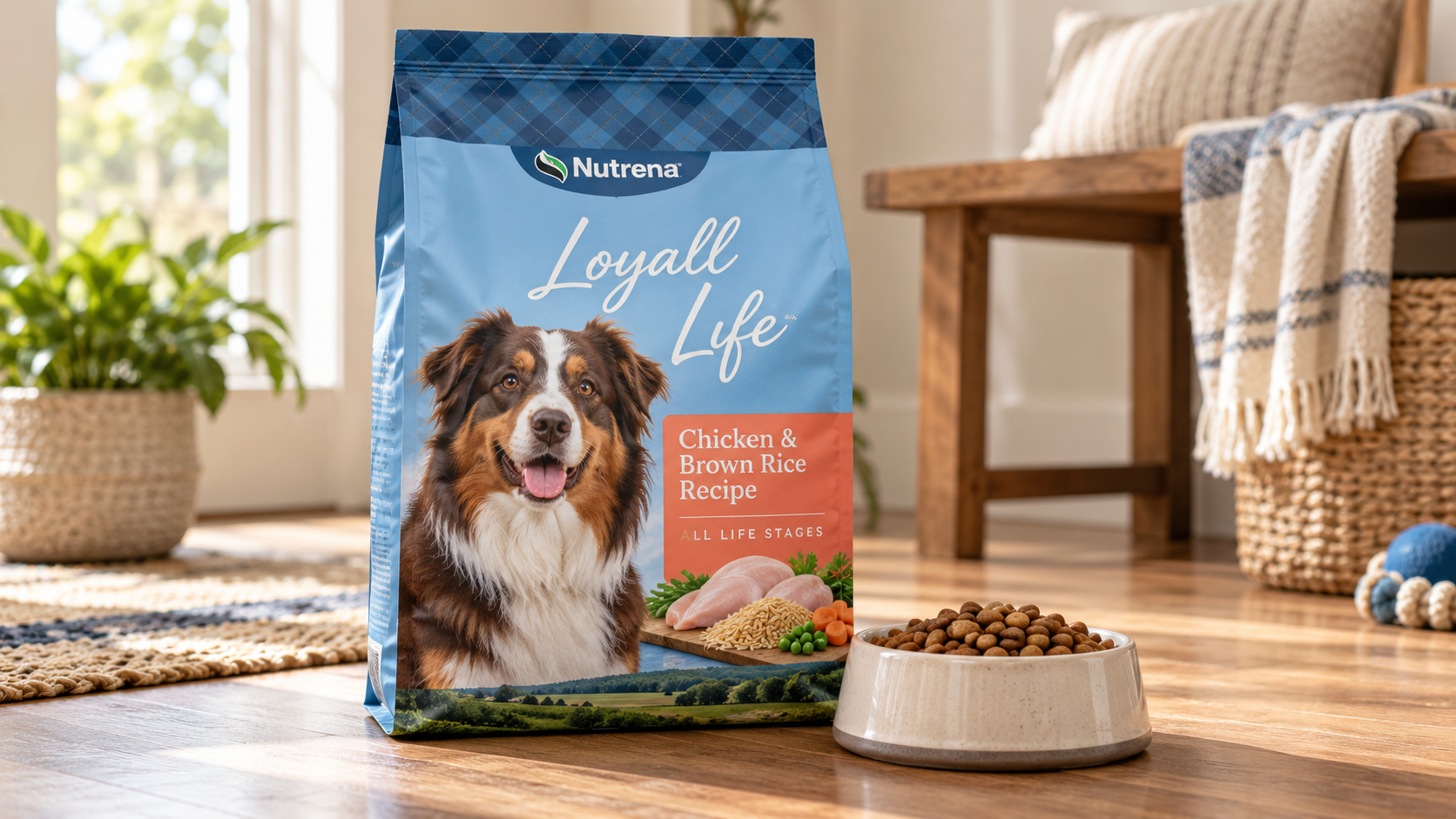
Finding a dry food that works across different life stages can simplify feeding, especially in a home with dogs of different ages. Nutrena Loyall Life Chicken & Brown Rice Recipe Dog Food is formulated as complete and balanced nutrition for dogs across life stages and breed sizes, with chicken listed as its first ingredient.
The recipe contains 26% crude protein and 16% crude fat, along with grains, fruits, vegetables, fatty acids, probiotics, and other nutritional additions. It also contains no corn, wheat, or soy. If you are comparing everyday dry foods and want to know what you actually get from this formula, the ingredients, calorie content, feeding needs, and nutritional profile can help you decide if it fits your dog.
Nutrena Loyall Life Chicken & Brown Rice Recipe Dog Food at a Glance
Nutrena Loyall Life Chicken & Brown Rice Recipe Dog Food uses chicken as its first ingredient, followed by chicken meal and brown rice. The manufacturer lists the formula at 373 kcal per cup, with 26% minimum crude protein and 16% minimum crude fat. Here are the main product details:
- Food type: Dry dog food
- Primary ingredient: Chicken
- Protein: 26% minimum
- Fat: 16% minimum
- Fiber: 4% maximum
- Moisture: 10% maximum
- Calories: 373 kcal per cup
- Calcium: 1.2% minimum and 1.8% maximum
- Phosphorus: 1.0% minimum
- DHA: 0.04% minimum
- Omega-6 fatty acids: 2.8% minimum
- Omega-3 fatty acids: 0.5% minimum
- Glucosamine: 350 mg/kg minimum
- Chondroitin sulfate: 300 mg/kg minimum
- Taurine: 0.1% minimum
- Life stages: Formulated for dogs across life stages
- Corn, wheat, and soy: None listed in the recipe
These specifications place the formula in the category of chicken and brown rice dog food designed for everyday feeding rather than a highly specialized veterinary diet.
What Ingredients Are Used?
The ingredient list starts with chicken, chicken meal, brown rice, whole grain sorghum, pearled barley, and chicken fat. It also contains dried peas, pea protein, beet pulp, flaxseed, fish oil, and yeast culture. Chicken being listed first is useful if you prefer an animal protein at the beginning of the ingredient panel.
Chicken meal supplies another concentrated source of animal protein and is identified by Nutrena as a source of glucosamine and chondroitin sulfate. Brown rice, sorghum, and barley provide the primary grain ingredients.
If you specifically want dry dog food with real chicken and do not need a grain-free formula, this ingredient structure may fit your shopping criteria. The recipe also includes smaller quantities of sweet potatoes, carrots, tomato pomace, apple pomace, blueberries, cranberries, and spinach.
Keep their placement on the ingredient list in mind: these ingredients appear well after the primary protein and carbohydrate sources, so they should not be treated as the main nutritional foundation of the food. Nutrena notes that products are made regionally and ingredients can vary, so checking the current package before feeding is sensible.
Protein, Fat, and Calorie Content
The guaranteed analysis provides a useful starting point when comparing this recipe against competing foods. You get a minimum of 26% crude protein and 16% crude fat, while crude fiber is capped at 4%. Each cup supplies approximately 373 kcal.
For comparison within the Loyall Life line, the Large Breed Chicken & Brown Rice Recipe contains 23% protein, 13% fat, and 345 kcal per cup. The Puppy Chicken & Brown Rice Recipe contains 30% protein, 20% fat, and 389 kcal per cup.
That puts the standard chicken-and-rice recipe between these specialized formulas in several key nutritional measurements. For your dog, calorie requirements still depend on body size, age, activity, environment, and body condition.
The amount printed on the feeding chart should therefore function as a starting point rather than a fixed daily requirement.
Digestive Support
Digestive ingredients are one reason you may compare this product with other dog food for healthy digestion options. The recipe contains dried plain beet pulp and yeast culture, plus several dried fermentation products.
Nutrena guarantees a minimum total microbial count of 80 million CFU per pound from listed microorganisms such as Enterococcus faecium and several Lactobacillus species. That does not mean every dog will respond to the food in the same way.
Individual tolerance can vary significantly, especially when changing protein sources or introducing a different fiber profile. If your dog has persistent digestive problems, food allergies, or another diagnosed condition, your veterinarian can help determine if a standard maintenance formula is suitable.
Skin and Coat Nutrition
Fatty acids are another notable part of the nutritional profile. The formula guarantees at least 2.8% omega-6 fatty acids and 0.5% omega-3 fatty acids. Fish oil and whole flaxseed appear in the ingredient list, while fish oil is identified as a source of DHA.
These ingredients make the product relevant when comparing dog food with omega fatty acids. Fatty acids play established nutritional roles in dogs, although the condition of your dog's skin and coat can depend on diet, grooming, environment, allergies, parasites, and underlying health issues.
The formula also contains at least 150 IU/kg of vitamin E and 150 mg/kg of zinc.
Joint-Related Nutrients
Nutrena guarantees at least 350 mg/kg of glucosamine and 300 mg/kg of chondroitin sulfate in this recipe. Chicken meal is listed as a source of both compounds. Their presence may interest you when comparing foods containing joint-related nutritional ingredients.
However, a food containing glucosamine and chondroitin should not automatically be treated as a substitute for veterinary treatment or a veterinarian-recommended joint supplement.
For a dog with existing mobility problems, your veterinarian can assess the amount needed based on weight and health status.
Does It Contain Corn, Wheat, or Soy?
No. Nutrena categorizes this formula among its foods made without corn, wheat, or soy. It is not grain-free, though. Brown rice, whole grain sorghum, and pearled barley are prominent ingredients.
This distinction matters if you are searching for dog food without corn wheat or soy but still want grains in your dog's diet. Avoid confusing a no-corn, no-wheat, no-soy recipe with a grain-free food because they describe different formulations.
Can Puppies Eat This Food?
Nutrena describes its standard Chicken & Brown Rice Recipe as complete and balanced nutrition for dogs of all ages and breeds. The company's product catalog also places the recipe among foods suitable across life stages.
Nutrena separately sells Puppy Chicken & Brown Rice and Puppy Large Breed Chicken & Brown Rice formulas. The regular puppy recipe has 30% protein and 20% fat, compared with 26% protein and 16% fat in the standard formula.
If you have a growing large-breed puppy, pay particular attention to growth-stage nutritional requirements and feeding amounts. Your veterinarian can help you select an appropriate formula for your puppy's expected adult size.
How Much Should You Feed?
Feeding amounts vary with body weight and age. Nutrena publishes separate recommendations for different weight and age ranges and advises adjusting the amount as necessary to maintain an appropriate body condition. A few practical habits can make portion management easier:
- Measure food with the same measuring cup each day.
- Account for treats when estimating total daily calories.
- Divide the daily portion into meals that suit your dog's routine.
- Check body condition regularly instead of relying only on body weight.
- Adjust portions when activity levels change.
- Keep clean drinking water available at all times.
- Store the bag sealed in a cool, dry place.
A veterinarian can provide a calorie target if your dog needs to gain, lose, or maintain a specific weight.
What Are the Main Advantages?
This formula has several characteristics that may make it worth comparing with other complete and balanced dog food choices.
- Chicken is the first listed ingredient.
- It contains 26% minimum crude protein.
- It provides 16% minimum crude fat.
- It supplies 373 kcal per cup.
- Brown rice is one of the primary carbohydrate ingredients.
- It contains omega-3 and omega-6 fatty acids.
- DHA is included in the guaranteed analysis.
- Glucosamine and chondroitin sulfate are included.
- Several fermentation products are used.
- Corn, wheat, and soy are excluded.
- The manufacturer describes the formula as suitable across life stages.
What Should You Keep in Mind Before Buying?
No dry food fits every dog. This recipe uses chicken and chicken meal prominently, so it will not suit a dog that needs to avoid chicken. It also contains multiple grain ingredients and peas.
If your veterinarian has recommended avoiding a particular ingredient due to a diagnosed food sensitivity, read the complete package label rather than relying on the front-of-bag description. The 373 kcal-per-cup energy density is another factor to watch.
Your dog's serving size may need adjustment if activity decreases, weight changes, or treats contribute a significant number of calories. Finally, Nutrena states that regional production can result in ingredient differences.
Checking the bag you actually purchase gives you the most current ingredient information.
How Does It Compare With Other Loyall Life Chicken Recipes?
The standard recipe sits between several specialized Loyall Life chicken formulas. Here is how their nutritional profiles compare:
- Chicken & Brown Rice: 26% minimum crude protein, 16% minimum crude fat, and approximately 373 kcal per cup.
- Large Breed Chicken & Brown Rice: 23% minimum crude protein, 13% minimum crude fat, and approximately 345 kcal per cup.
- Puppy Chicken & Brown Rice: 30% minimum crude protein, 20% minimum crude fat, and approximately 389 kcal per cup.
- Puppy Large Breed Chicken & Brown Rice: 26% minimum crude protein, 14% minimum crude fat, and approximately 350 kcal per cup.
- Advanced Solutions Healthy Digestion Chicken & Brown Rice: 26% minimum crude protein, 14% minimum crude fat, and approximately 345 kcal per cup.
Nutrena's published specifications show differences in protein, fat, and calorie density across these recipes. Those differences can help you narrow your choices based on your dog's life stage, breed size, calorie needs, and digestive requirements.
Frequently Asked Questions
Is chicken the first ingredient?
Yes. Nutrena lists chicken first, followed by chicken meal and brown rice.
How much protein does the food contain?
The guaranteed analysis lists a minimum crude protein level of 26%.
How many calories are in one cup?
The formula contains approximately 373 kcal per cup.
Does it contain probiotics?
The ingredient list includes several dried fermentation products, and the guaranteed analysis lists a minimum total microbial count of 80 million CFU per pound.
Is it grain-free?
No. The recipe contains brown rice, whole grain sorghum, and pearled barley.
Does it contain corn, wheat, or soy?
Nutrena lists this recipe in its no-corn, no-wheat, no-soy category.
Does it contain glucosamine?
Yes. Nutrena guarantees at least 350 mg/kg of glucosamine and 300 mg/kg of chondroitin sulfate.
Who Should Buy Nutrena Loyall Life Chicken & Brown Rice Dog Food?
Nutrena Loyall Life Chicken & Brown Rice Recipe Dog Food provides a chicken-first formula with 26% protein, 16% fat, and 373 kcal per cup. Its ingredient list combines animal protein with brown rice and other grains, fish oil, flaxseed, fruits, vegetables, and fermentation products.
For shoppers, the strongest reasons to compare it with similar dry foods are its chicken-first ingredient list, no-corn/no-wheat/no-soy formulation, fatty acid profile, and inclusion of glucosamine and chondroitin. Your dog's age, weight, activity level, ingredient tolerance, and health needs should ultimately guide the feeding decision.