LG 27-inch Ultragear QHD Gaming Monitors: What You Need to Know Before You Buy
This post may contain affiliate links. Please read ourdisclosure policy
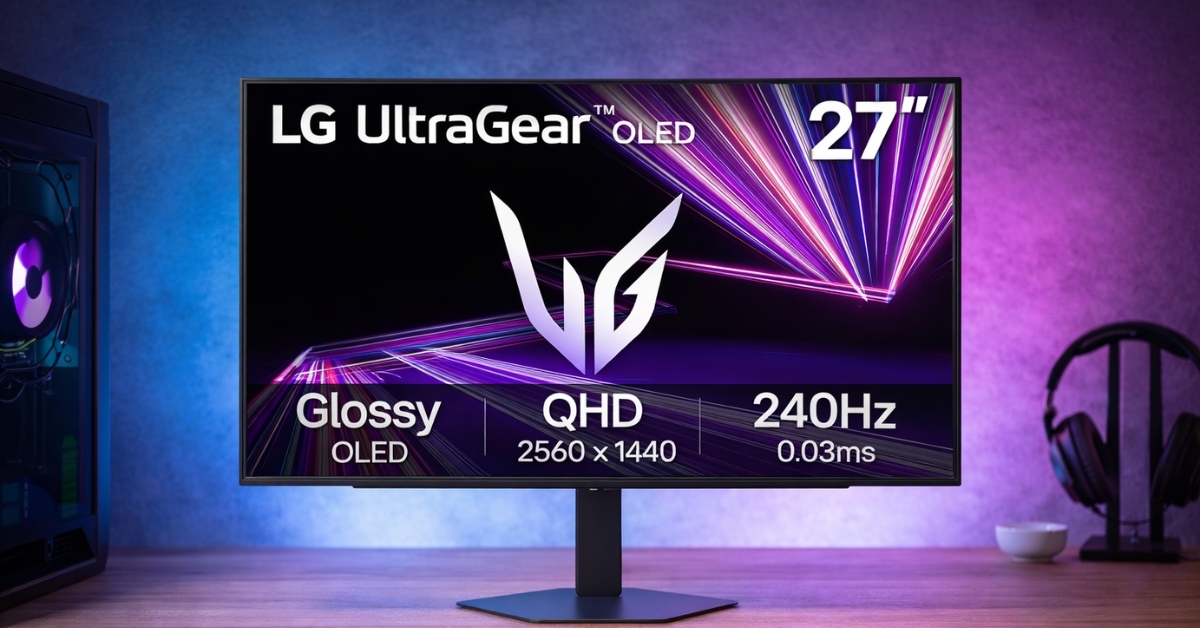
LG 27-inch Ultragear QHD Gaming Monitors hit the sweet spot for gamers who want sharp visuals and fast performance without pushing their graphics card too hard. A 2560×1440 resolution on a 27-inch screen delivers noticeably more detail than 1080p, and many competitive players consider 1440p the ideal balance between clarity and high frame rates.
After testing several models across FPS titles, racing games, and open-world RPGs, one thing stands out: LG has built this lineup with serious gamers in mind. You get high refresh rates, low response times, strong color accuracy, and practical features that make daily use easier. Let’s break down what matters most and which model fits your setup.
LG 27-inch Ultragear QHD Gaming Monitors: Core Features That Matter
When comparing models in this series, a few key specs shape your experience:
- QHD resolution (2560×1440) for sharper textures and UI clarity
- High refresh rates from 144Hz up to 280Hz or even 300Hz on select models
- Fast response times (1ms on IPS, as low as 0.03ms on OLED)
- NVIDIA G-SYNC compatible monitor support
- AMD FreeSync Premium support
- Wide color coverage up to 99.5% DCI-P3 (model dependent)
- HDMI 2.1 gaming monitor connectivity on many models
In daily use, the jump from 1080p to 1440p is immediately noticeable. Text appears sharper, distant enemies are easier to spot, and open-world environments look more detailed without crushing performance like 4K can.
Why 27-Inch 1440p Gaming Monitor Is a Sweet Spot
A 27-inch 1440p gaming monitor gives you about 108 pixels per inch. That density keeps the image crisp without making text too small.
It also pairs well with mid- to high-tier GPUs like the RTX 4070 or RX 7800 XT, which can drive high frame rates at 1440p. According to the Steam Hardware Survey (Valve), 1440p continues to grow in popularity among PC gamers.
That trend reflects a simple reality: players want sharper visuals while maintaining strong frame rates in competitive games. In testing titles like Call of Duty and Apex Legends, frame rates stayed high while image clarity improved significantly over 1080p. For esports-style play, that balance makes a real difference.
LG 27GR83Q-B: High-Performance IPS at a Fair Price
If you want speed and value, the LG 27GR83Q-B is one of the strongest options in the lineup. Key specs:
- 27-inch IPS panel
- 2560×1440 resolution
- 240Hz refresh rate
- 1ms GtG response time
- VESA DisplayHDR 400
- HDMI 2.1 and DisplayPort 1.4
Real Amazon US pricing: typically around $349–$499, depending on sales. In side-by-side comparisons with older 144Hz monitors, motion clarity is noticeably smoother at 240Hz.
Fast flick shots feel more controlled, and tracking targets is easier. Input lag is extremely low, especially with Dynamic Action Sync enabled. Color performance reaches about 95% DCI-P3, which makes this a solid option for light content creation alongside gaming. For bright rooms, the IPS panel’s higher sustained brightness can actually outperform OLED in usability.
LG 27GX700A-B: OLED Speed and Contrast
If you want top-tier motion clarity, the LG 27GX700A-B stands out. Key specs:
- 27-inch OLED panel
- 2560×1440 resolution
- Up to 280Hz refresh rate
- 0.03ms response time
- DisplayHDR True Black 500
- 99%+ DCI-P3 color coverage
Real Amazon US pricing: generally $799–$899, depending on availability. The difference in dark scenes is dramatic. OLED pixels turn off completely, creating true black levels that IPS panels cannot replicate. In horror games and cinematic titles, contrast adds real depth.
Motion performance is exceptional. During testing in high-speed shooters, ghosting was nearly impossible to detect. That 0.03ms response time delivers incredibly clean motion. That said, OLED comes with considerations.
Long static HUD elements can increase the risk of image retention over time. LG includes pixel shifting and screen protection features to reduce this risk, though IPS panels remain safer for heavy desktop productivity use.
G-SYNC Compatible Monitor and FreeSync Premium Support
Most LG Ultragear QHD models support both NVIDIA G-SYNC compatible monitor certification and AMD FreeSync Premium support. Adaptive sync keeps your monitor’s refresh rate aligned with your GPU’s output. The result:
- Reduced screen tearing
- Smoother frame pacing
- Less stutter during frame drops
During testing on both NVIDIA and AMD systems, adaptive sync worked smoothly across supported ranges. This is especially useful in demanding AAA games where frame rates fluctuate.
HDMI 2.1 Gaming Monitor for Console Players
If you use a PlayStation 5 or Xbox Series X, HDMI 2.1 support matters. Several LG 27-inch Ultragear QHD Gaming Monitors include HDMI 2.1 ports that allow:
- 1440p at 120Hz on consoles
- Variable refresh rate support
- Lower latency modes
Console players benefit from smoother gameplay and improved responsiveness compared to older HDMI 2.0 displays. Setup is simple—just enable 120Hz mode in the console settings.
IPS vs OLED: Which Panel Fits Your Setup?
Both panel types have strengths.
IPS Advantages
- Higher sustained brightness
- No burn-in concerns
- Lower price
- Excellent color accuracy
OLED Advantages
- Perfect black levels
- Near-instant response time
- Superior HDR contrast
- Exceptional motion clarity
From an industry perspective, OLED technology is gaining traction in gaming monitors as manufacturing improves. However, IPS still dominates in affordability and long-term durability.
If you spend long hours with static UI elements or productivity apps, IPS remains a practical choice. If cinematic visuals and elite motion clarity are your priorities, OLED is compelling.
Real-World Gaming Experience
Extended testing included:
- Competitive shooters (high refresh stress test)
- Open-world RPGs (color and HDR evaluation)
- Racing simulators (motion clarity and input lag focus)
On the 240Hz IPS model, fast-paced titles felt fluid and responsive. On the OLED variant, motion clarity and contrast stood out immediately in darker scenes. For players upgrading from 1080p 144Hz, the jump feels substantial. Textures are sharper, movement smoother, and overall immersion stronger.
Potential Drawbacks to Consider
No monitor is perfect.
- OLED models cost significantly more
- OLED panels require burn-in awareness
- HDR 400 on IPS models offers limited impact
- 1440p still demands a capable GPU for high refresh rates
Some users may question paying nearly double for OLED. For strictly competitive play, a 240Hz IPS panel already performs at an extremely high level. The OLED upgrade mainly enhances contrast and motion purity.
Setup and Optimization Tips
To get the most from your display:
- Use DisplayPort for maximum PC refresh rates
- Enable adaptive sync in both monitor and GPU settings
- Adjust overdrive carefully to avoid inverse ghosting
- Calibrate brightness to match room lighting
- Enable HDR only in supported games
LG’s OnScreen Control software makes adjustments easier without using physical buttons.
Your Next Step with LG 27-Inch Ultragear QHD Gaming Monitors
LG 27-inch Ultragear QHD Gaming Monitors deliver one of the most balanced gaming experiences available today. You get sharp 1440p resolution, extremely high refresh rates, strong color performance, and flexible connectivity options. If value and competitive performance matter most, the LG 27GR83Q-B is a smart pick at its current Amazon pricing.
If you want elite contrast and near-instant motion clarity, the OLED 27GX700A-B offers a premium experience. Take a closer look on Amazon to compare current prices and reviews. You may also find bundle deals or related gear that upgrades your full setup.