How Fish Sleep, Communicate, and Explore Their Underwater World
This post may contain affiliate links. Please read ourdisclosure policy
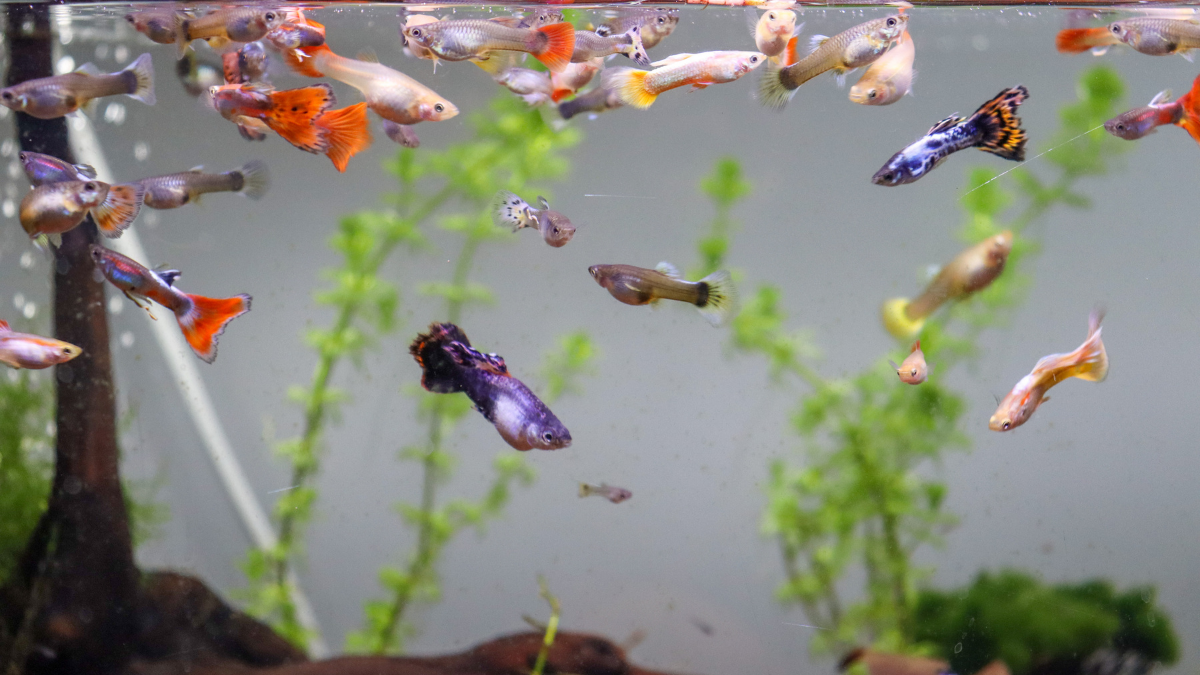
Fish may seem quiet compared with many other pets, but there's a lot happening beneath the surface. They rest, communicate, navigate, learn from experience, recognize environmental patterns, and use specialized senses to understand what's happening around them. Learning about these behaviors can make watching an aquarium far more interesting—and help you recognize what's normal for the fish in your care.
Do Fish Actually Sleep?
Fish don't sleep exactly as people do, but many species experience periods of reduced activity that provide rest. A resting fish might hover nearly motionless, settle near the bottom, shelter among plants or rocks, or assume a characteristic resting position. Because most fish don't have eyelids, they generally can't close their eyes while resting. That means a fish sitting quietly with its eyes open isn't necessarily awake and active.
How Do Fish Know When It's Day or Night?
Light is an important environmental signal. Some species are primarily active during daylight, while others become more active after dark. Changes in light can influence feeding, rest, movement, reproduction, and other behaviors. For aquarium fish, this is one reason lighting should generally follow an appropriate schedule rather than remaining on continuously.
Fish Experience More Than What They See
Vision is only part of a fish's sensory world. Depending on the species, fish can detect:
- Light and visual movement
- Chemical cues
- Sounds and vibrations
- Pressure changes
- Water movement
Which senses matter most depends partly on the habitat. Fish living in clear water may rely heavily on vision, while species from dark or murky environments may depend more on other sensory information.
The Lateral Line Helps Fish Feel Movement
One particularly fascinating adaptation is the lateral line, a sensory system that helps fish detect movement and disturbances in the surrounding water. It can contribute to navigation, locating prey, avoiding predators, and coordinating movement with other fish. In a sense, fish can detect subtle changes in the water around them that humans can't perceive naturally.
How Do Fish Communicate?
Fish don't need voices to exchange information. Communication can involve body posture, swimming patterns, color changes, chemical signals, sounds, and vibrations. Some species can even produce sounds using specialized muscles or body structures. These sounds may play roles in courtship, territorial encounters, aggression, and other social interactions.
Why Do Some Fish Swim in Schools?
Some species naturally live in groups. Schooling generally describes coordinated group swimming, while shoaling more broadly refers to fish staying together socially without necessarily moving in tight synchronization. Group living may help reduce individual predation risk, improve opportunities for finding food, or support social and reproductive interactions. For aquarium owners, this makes researching appropriate group sizes important when keeping naturally social species.
Fish Can Learn and Remember
The familiar idea that fish have extremely short memories is an oversimplification. Fish can learn and retain information useful to their survival. Depending on the species, they may remember feeding opportunities, locations, threats, social interactions, or learned tasks. Aquarium fish may also learn that certain routines, movements, objects, or people predict feeding time.
Exploring Has a Purpose
When fish move throughout an aquarium, they aren't necessarily swimming aimlessly. They might be looking for food, exploring territory, interacting with other fish, investigating changes, or seeking shelter. Different species use aquarium space differently. Some stay near the bottom, while others prefer open water, vegetation, caves, or particular territories. Aquarium layouts should therefore reflect the natural behavior and needs of the species being kept.
Water Quality Can Change Behavior
Unusual behavior isn't always personality or boredom. Temperature, oxygen availability, ammonia, nitrite, nitrate, pH, salinity when applicable, and other environmental factors can influence fish. Unexpected changes in swimming, breathing, appetite, tank position, or social behavior can sometimes indicate an environmental or health concern. Checking water conditions is an important first step when behavior changes unexpectedly.
A Closer Look Beneath the Surface
The more closely you observe fish, the more complex their behavior becomes. Notice where your fish rest, when they're most active, how they respond to tank mates, which areas they prefer, and what happens around feeding time. These patterns can help you understand normal behavior and recognize unusual changes sooner. Fish experience an underwater environment filled with light, chemicals, vibrations, sounds, water movement, and social signals. Providing suitable lighting cycles, good water quality, appropriate social groupings, hiding areas, swimming space, and species-specific enrichment can help create an aquarium that better supports these natural behaviors.