The Evolution of Automotive Performance Upgrades: Why Tuning Has Shifted from Mechanical Skill to Digital Precision
This post may contain affiliate links. Please read ourdisclosure policy
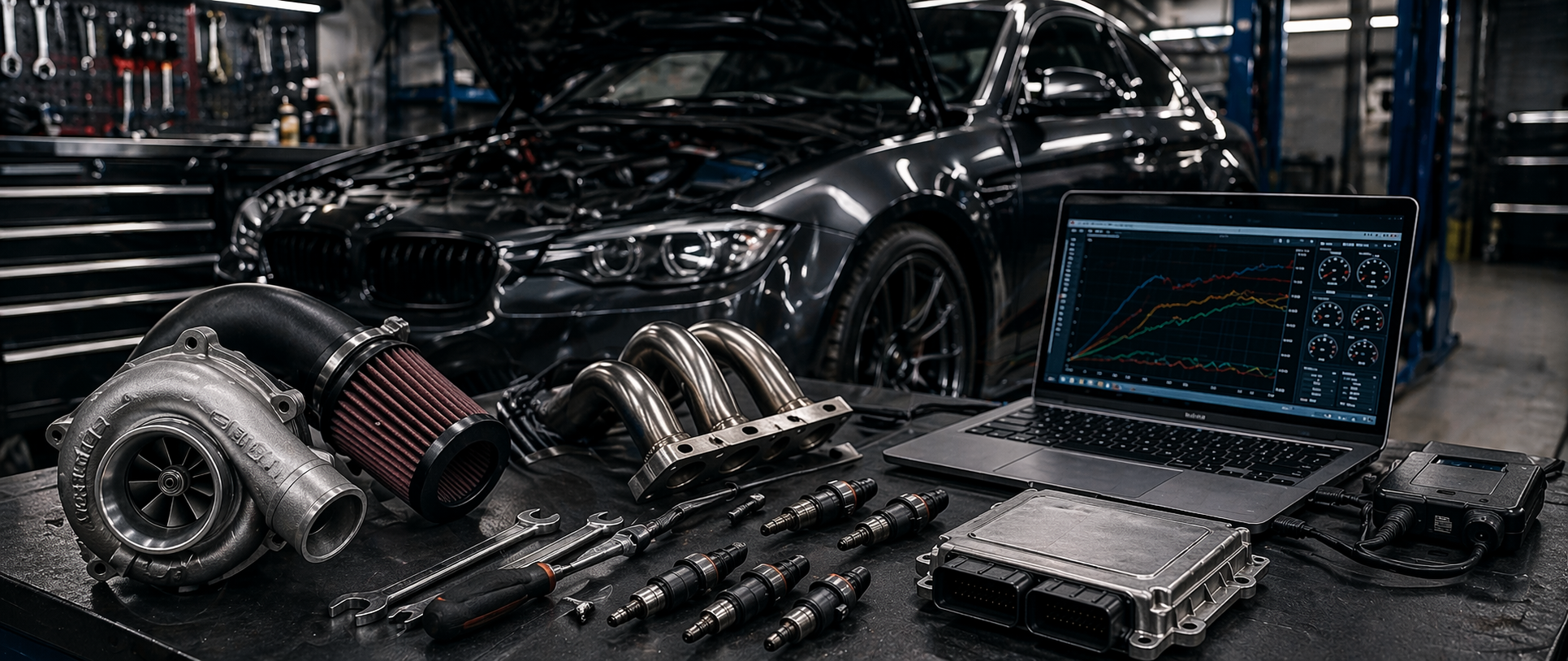
Before electronics entered the scene, performance tuning relied on hands-on expertise. Builders worked with carburetors, ignition timing, and airflow adjustments to extract power. Hot rodding defined this era. Enthusiasts swapped engines, upgraded camshafts, and built custom exhaust systems. Results varied widely because everything depended on skill and experience. There was no standardization. Two identical setups could perform differently depending on execution.
The Rise of Precision: Fuel Injection and ECUs
The shift to electronic fuel injection changed everything. Engines became more efficient and predictable.
- ECUs allowed precise control of fuel and ignition timing
- Tuners could now adjust performance digitally
- Hardware upgrades required software calibration to match
This period introduced the idea that performance is both mechanical and digital.
Making Performance Accessible: The Bolt-On Era
Performance upgrades became easier to access in the 1990s and early 2000s. Pre-engineered parts reduced complexity. Retailers like Summit Racing played a major role by offering wide catalogs of parts. Enthusiasts could compare, choose, and install upgrades without custom fabrication.
- Cold air intakes and headers became common
- Turbo kits were designed for specific vehicles
- Installation guides simplified the process
Summit Racing helped turn performance tuning into a mainstream hobby rather than a niche skill.
Boosting Power: Forced Induction and Data Tuning
Turbochargers and superchargers became more reliable and widely used. Smaller engines started producing higher output. At the same time, tuning software advanced.
- Custom ECU maps optimized performance
- Dyno testing measured real horsepower gains
- Data replaced guesswork in tuning decisions
This era marked the shift toward measurable, repeatable results.
Smart Performance: Digital Integration Today
Modern vehicles rely heavily on software. Performance upgrades now involve both hardware and real-time data systems.
- Mobile apps monitor engine metrics
- Wireless tuning allows quick adjustments
- Plug-and-play devices simplify ECU changes
Drivers now interact with performance data directly. What once required a tuning shop is now accessible through a screen.
Electric and Hybrid Tuning: A New Direction
Performance is no longer limited to combustion engines. Electric vehicles introduced a different approach.
- Software updates improve acceleration and efficiency
- Battery and thermal management affect performance
- Hardware upgrades focus on cooling and weight
Tuning is shifting toward software engineering rather than mechanical modification
Materials and Engineering Advancements
Modern performance gains also come from better materials.
- Aluminum reduces weight while maintaining strength
- Carbon fiber improves performance and durability
- CNC machining ensures consistent part quality
These innovations make upgrades more reliable and predictable.
The Role of Community and DIY Culture
Access to knowledge has changed how enthusiasts approach tuning. Online forums, tutorials, and guides allow beginners to learn quickly. Parts from suppliers like Summit Racing continue to support this ecosystem. DIY tuning is no longer limited to experts. With the right tools, more people can participate confidently.
What the Future Looks Like
Performance tuning is moving toward automation and intelligence.
- AI-assisted tuning will optimize settings instantly
- Predictive diagnostics will prevent failures
- Software updates will replace many hardware upgrades
Efficiency and sustainability will become as important as horsepower.
Why Performance Tuning Keeps Evolving
The evolution of automotive performance reflects a broader shift toward precision and accessibility. What began as trial-and-error mechanics is now driven by data, software, and advanced engineering. The goal remains the same—more power and better efficiency. The difference is how that goal is achieved.