How Dogs Communicate: Understanding Body Language, Sounds, and Behavior
This post may contain affiliate links. Please read ourdisclosure policy
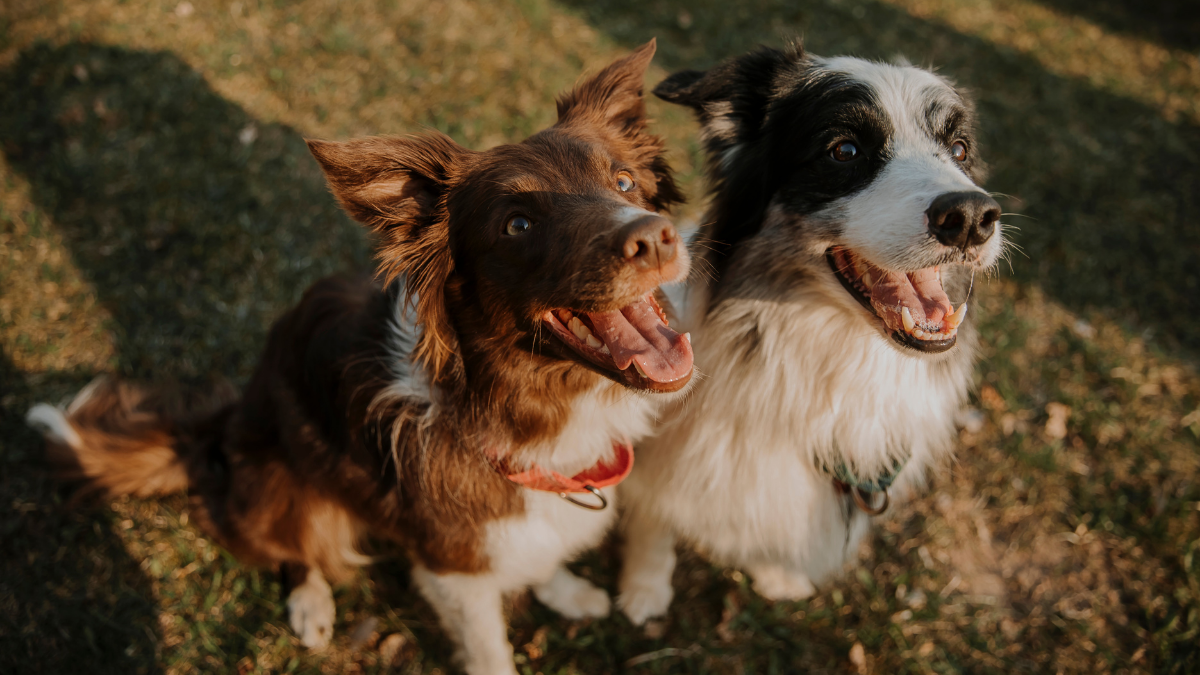
Dogs communicate constantly, but understanding them means looking beyond barking or a wagging tail. Posture, facial expressions, movement, vocalizations, and the situation surrounding a behavior all provide clues about what your dog may be experiencing. Learning to read these signals together can help you respond more appropriately and recognize when your dog is relaxed, playful, uncertain, or uncomfortable.
Look at the Whole Dog
A wagging tail alone doesn't necessarily mean a dog is happy. Tail position, speed, stiffness, ears, eyes, mouth, posture, and movement should all be considered together. A relaxed dog may have loose muscles, easy movements, neutral ears, and a softly open mouth. Because breeds have different physical characteristics, learning your individual dog's normal relaxed appearance is especially helpful.
Watch the Eyes, Ears, and Face
Facial expressions can reveal important information. Soft-looking eyes may accompany relaxation, while an intense stare or facial tension can indicate heightened attention or discomfort. You may also notice behaviors such as lip licking or yawning. These can be completely ordinary, but when they occur alongside stiffness, avoidance, or other stress-related behaviors, they may suggest that your dog is uncomfortable.
Understand Playful Communication
The classic play bow—front end lowered with the rear raised—is one of the easiest playful signals to recognize. Healthy play may also involve:
- Bouncy or exaggerated movements
- Chasing
- Playful barking or growling
- Brief pauses
- Role reversals
Both dogs should have opportunities to disengage. If one repeatedly tries to escape or hide while the other continues pursuing, closer supervision is appropriate.
Listen to What Your Dog Is Saying
Dogs use several vocalizations, and each can have different meanings depending on context. Barking may occur because of excitement, alarm, play, attention-seeking, frustration, fear, or territorial behavior. Whining can indicate excitement or uncertainty, but persistent or unexplained whining can sometimes accompany physical discomfort. Growling also deserves attention. Rather than simply treating it as "bad behavior," consider what triggered it. A growl can communicate discomfort, fear, guarding, playfulness, or a desire for more distance.
Recognize When Your Dog Wants Space
Dogs often communicate discomfort before resorting to more obvious warning behaviors. You might notice your dog:
- Turning its head or moving away
- Lowering its body
- Becoming unusually still
- Avoiding eye contact
- Licking its lips or yawning
- Lowering or tucking its tail
- Holding its body rigidly
One behavior alone doesn't necessarily indicate fear or stress. Several signals appearing together are more meaningful. Sudden freezing deserves particular attention. If a moving dog suddenly becomes rigid during an interaction, avoid forcing further contact and give the dog an opportunity to disengage.
Everyday Behaviors Communicate Too
Following you around, sniffing during walks, rolling over, or shaking off when dry can all provide information. Sniffing, for example, is an important way dogs investigate their surroundings, making leisurely sniffing opportunities a valuable form of mental enrichment during walks. Rolling onto the back doesn't automatically mean "rub my belly," either. Context and overall posture can help you determine whether your dog wants interaction or space.
Learn Your Dog's Individual Language
Every dog communicates somewhat differently. Breed, age, health, socialization, genetics, previous experiences, and environment can influence behavior. Pay attention to your dog's normal patterns so changes become easier to recognize. Sudden behavioral changes can sometimes have medical causes, particularly when accompanied by changes in appetite, movement, sleep, elimination, sensitivity to touch, or energy.
Becoming a Better Listener
Understanding dog communication isn't about memorizing a dictionary of individual gestures. It's about observing the entire dog and considering what is happening around them. The more familiar you become with your dog's usual posture, movements, sounds, and responses, the easier it becomes to recognize when they're comfortable, excited, uncertain, or asking for space.