How to Find the Best Digital Products to Sell on Shopify
This post may contain affiliate links. Please read ourdisclosure policy
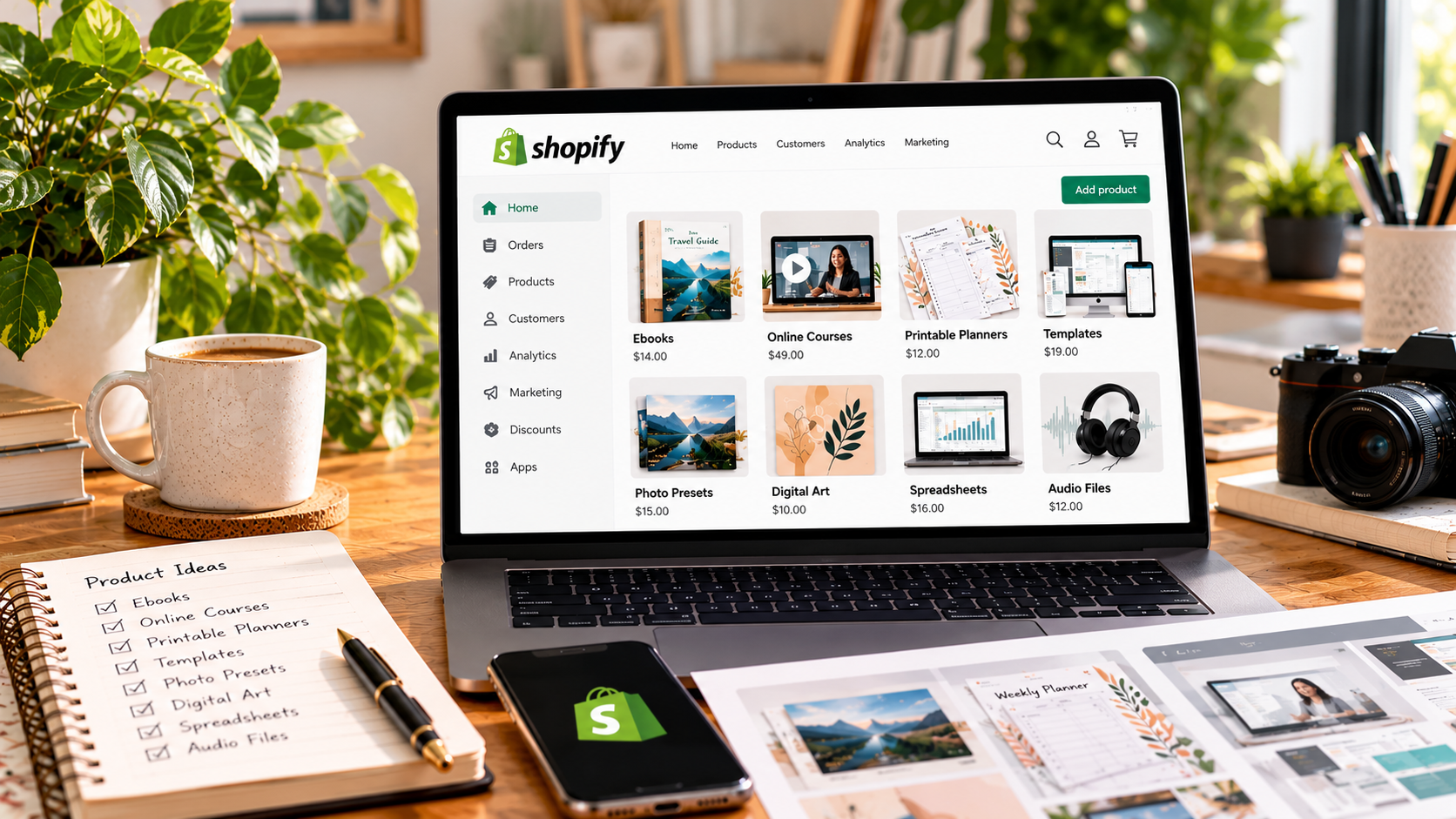
Selling digital products can be an accessible way to start an online business without managing physical inventory, packaging, or shipping. From downloadable planners to online courses, digital goods allow you to create something once and sell it repeatedly through an online storefront.
If you're researching the best digital products to sell on Shopify, you'll find plenty of opportunities across education, design, business, entertainment, and personal productivity.
The right choice depends on your skills, target customers, production costs, and marketing strategy. This guide covers 12 digital product ideas, potential selling prices, and practical tips for building a Shopify store that customers can use confidently.
What Are the Best Digital Products to Sell on Shopify?
The best digital products to sell on Shopify are products that solve specific customer problems, provide practical value, and can be delivered electronically.
Unlike physical merchandise, digital products generally require no warehouse storage or shipping arrangements. Customers can receive their purchases through download links, email delivery, or access to a protected online platform. Popular digital product categories include:
- Ebooks and downloadable guides
- Online courses and educational resources
- Printable planners and worksheets
- Website templates and digital designs
- Photography presets and editing tools
- Digital artwork and illustrations
- Business spreadsheets and templates
- Audio files and sound effects
Although digital products can have relatively low fulfillment costs, successful selling still requires product development, marketing, customer support, and regular updates.
1. Ebooks and Downloadable Guides
Ebooks are popular digital products because they can provide valuable information in a convenient format. You can create ebooks about personal finance, fitness, cooking, career development, photography, or other subjects you understand well. For example, a beginner photography guide might explain camera settings, lighting techniques, and photo composition.
Illustrative selling price: $5–$30 per ebook. To improve customer satisfaction, provide a clear table of contents, readable formatting, and downloadable PDF or EPUB files.
2. Online Courses and Educational Materials
Online courses allow you to share practical knowledge through recorded lessons, downloadable resources, and exercises. Potential course topics include graphic design, coding, digital marketing, language learning, and business management.
You can organize lessons into beginner, intermediate, and advanced sections to help customers follow a structured learning path. Illustrative selling price: $20–$200 or higher, depending on course length, instruction, and included resources.
Shopify can support course sales through compatible learning management applications or integrations. Check the application's fees and access controls before publishing.
3. Printable Planners and Organizers
Printable planners are suitable for customers who prefer organizing their activities on paper. Popular examples include daily schedules, weekly calendars, budget planners, meal planners, and fitness tracking sheets.
You can design printable products using graphic design software and provide them as downloadable PDF files. Illustrative selling price: $3–$20 per planner or printable collection. Include paper-size information, printing instructions, and sample pages so customers understand what they are purchasing.
4. Website Templates and Design Assets
Website templates help individuals and businesses create professional-looking websites without designing every element from scratch. You might sell landing page templates, presentation designs, social media graphics, or editable marketing materials.
Customers often value templates that save time and allow easy customization. Illustrative selling price: $10–$100 or higher, depending on functionality and licensing rights. Before selling, verify that you own the design elements or have permission to redistribute them. Explain which software customers need to edit the files.
5. Digital Art and Printable Wall Decor
Digital artwork can attract customers interested in decorating homes, offices, and personal spaces. Examples include minimalist illustrations, typography prints, abstract artwork, and personalized designs.
Customers purchase downloadable files and arrange printing independently. Illustrative selling price: $5–$40 per design. Provide high-resolution files and recommended printing dimensions. You should also explain that frames and physical prints are not included.
6. Photography Presets and Editing Tools
Photography presets help users apply consistent editing settings to photographs. You can create presets for portraits, landscapes, travel photography, or social media content.
These products may interest photographers, content creators, and small business owners. Illustrative selling price: $10–$50 per preset collection. Include before-and-after examples, installation instructions, and compatibility details. Explain that final results depend on the original photograph and editing software.
7. Business Templates and Spreadsheets
Business templates can help customers manage routine administrative and financial tasks. Potential products include invoice templates, expense trackers, inventory spreadsheets, project schedules, and business planning documents.
These products are particularly useful when they address a clearly defined business need. Illustrative selling price: $5–$60 per template or collection. Test formulas, provide instructions, and identify compatible software versions before making the files available for purchase.
8. Digital Invitations and Event Templates
Editable invitations are suitable for weddings, birthdays, baby showers, and other celebrations. You can create downloadable designs that customers personalize with names, dates, locations, and event information.
Some sellers provide editable templates, while others deliver customized files after receiving customer details. Illustrative selling price: $5–$35 per invitation design. Clearly explain the editing process, delivery method, customization limits, and expected turnaround time.
9. Audio Files and Sound Effects
Audio products can serve video editors, podcasters, filmmakers, and content creators. Examples include background music, sound effects, podcast introductions, meditation recordings, and notification sounds.
Illustrative selling price: $5–$75 per audio collection. Provide sample recordings and specify supported file formats. Licensing information matters because customers need to understand how they may use the audio in personal or commercial projects.
10. Stock Photos and Video Footage
Businesses and content creators regularly use licensed visual materials for websites, advertising, presentations, and social media. You can sell original photographs or video clips featuring workplaces, nature, lifestyle activities, food, or everyday objects.
Illustrative selling price: $5–$100 per image or footage package. Ensure that you have appropriate permissions for recognizable individuals, protected locations, and third-party intellectual property where applicable. Clearly describe permitted uses and redistribution restrictions.
11. Digital Journals and Self-Improvement Worksheets
Digital journals can help customers organize personal goals, track habits, and reflect on daily experiences. Examples include gratitude journals, goal-setting worksheets, reading logs, and personal development planners.
You can create printable versions or interactive documents designed for tablets and computers. Illustrative selling price: $4–$25 per journal. Keep layouts simple and provide instructions for customers unfamiliar with digital planning tools. Avoid presenting wellness worksheets as substitutes for professional medical or mental health care.
12. Memberships and Subscription-Based Resources
Subscription products allow customers to pay regularly for access to updated materials or services. Examples include educational resource libraries, design template collections, professional learning communities, and monthly planning materials.
Illustrative selling price: $5–$50 per month, depending on the resources and services included. Subscriptions require ongoing content development and reliable customer access. You may need a compatible Shopify subscription or membership application to manage recurring billing and protected content.
How Much Does It Cost to Sell Digital Products on Shopify?
Shopify provides the storefront, checkout, and order management tools needed to sell digital products. As an example, Shopify's Basic plan has commonly been advertised in the United States at approximately $39 per month with monthly billing or $29 per month with annual billing.
These are reference figures rather than verified October 2026 prices. Actual charges depend on your location, subscription selection, and current Shopify pricing.
Additional expenses may include:
- Digital delivery or subscription applications
- Payment processing and transaction fees
- Domain registration
- Design software
- Advertising and promotional campaigns
- Customer support and product maintenance
Some digital delivery applications have free plans, while others charge monthly fees or apply usage restrictions. Review the current Shopify pricing page and application listings before calculating your startup budget.
How to Start Selling Digital Products on Shopify
Getting started involves several practical tasks.
Choose a target audience. Identify customers with a specific need that your product can address. Develop your product. Create the downloadable files, course materials, templates, or other resources. Build your Shopify storefront. Select a suitable theme and create clear product pages with accurate descriptions. Configure digital delivery. Install a compatible application that provides download links or controls access after purchase. Set up payments and policies. Configure accepted payment methods, applicable taxes, licensing terms, and refund policies. Test the buying process. Complete a test order to check payment processing, file delivery, and customer instructions. Promote your products. Use relevant search keywords, helpful blog content, email marketing, and social media to reach potential buyers.
Shopify supports digital product sales, although certain delivery features depend on third-party or Shopify-developed applications.
How Can You Choose a Digital Product That Sells?
Begin by researching what customers need instead of selecting a product solely because it is inexpensive to produce. Review customer questions, competitor product descriptions, search trends, and feedback in relevant communities.
Evaluate the time required to create the product, expected selling price, competition, and potential support requirements. You can initially launch a small product collection and evaluate customer responses before expanding.
Clear descriptions, useful previews, transparent pricing, and straightforward download instructions can help customers make informed purchasing decisions.
Building a Successful Shopify Store With Digital Products
The best digital products to sell on Shopify depend on your expertise, intended audience, and ability to deliver practical value. Ebooks, printable planners, business templates, educational courses, and digital artwork can provide accessible starting points for an online business.
Focus on creating useful products, explaining their features accurately, and making the purchasing process straightforward. With careful research, ongoing improvements, and consistent promotion, you can develop a digital product store designed around your customers' needs.