How API Pond Algaefix Helps Control Common Algae in Ornamental Ponds
This post may contain affiliate links. Please read ourdisclosure policy
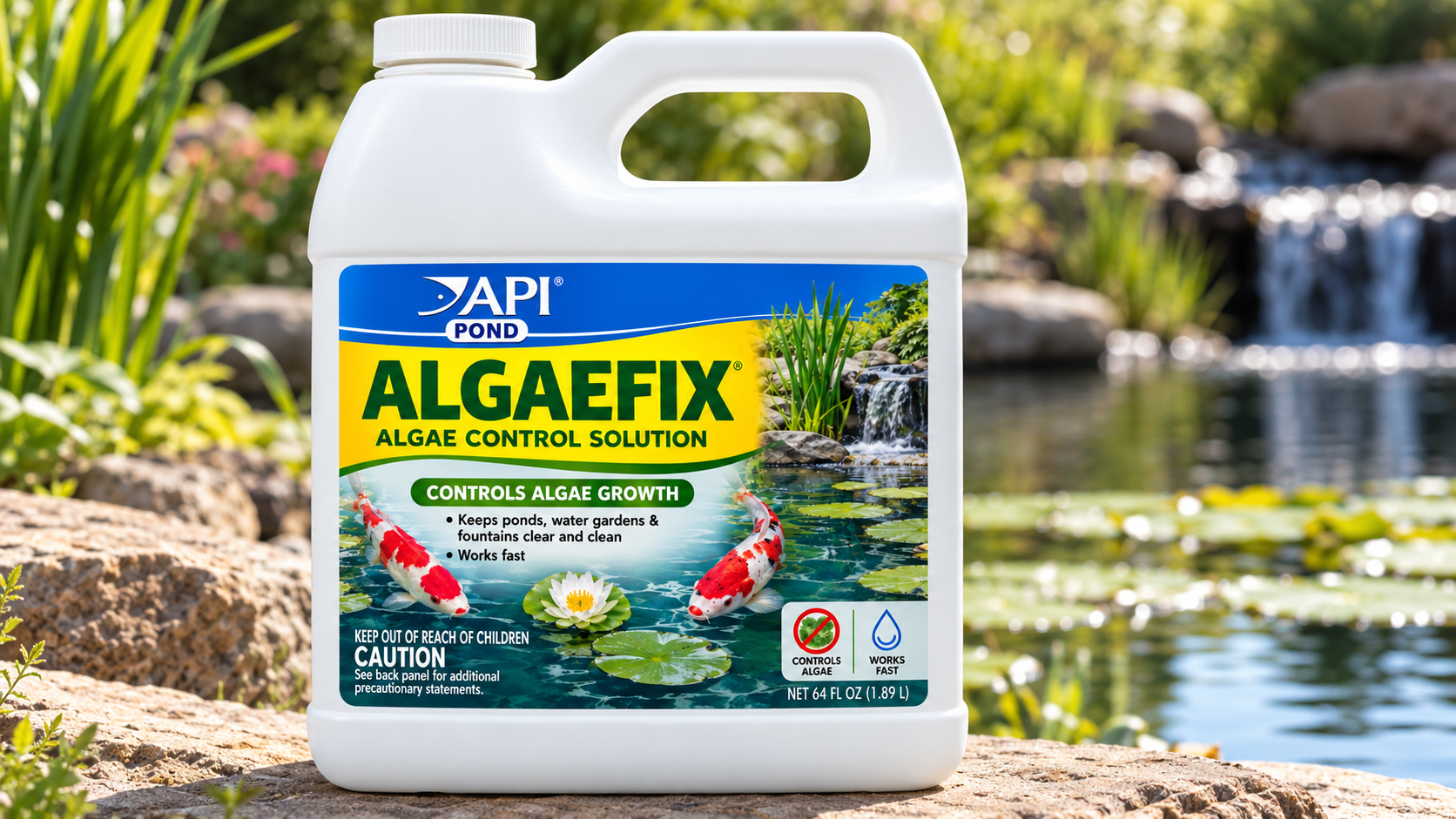
Algae can quickly affect the appearance and maintenance needs of an ornamental pond. API Pond Algaefix Algae Control Solution is a liquid treatment designed to control several common types of pond algae, including green water algae, string or hair algae, and blanketweed.
It can be used in ornamental ponds containing live fish and plants when applied according to the label directions. If you are comparing pond treatments, knowing its dosing requirements, safety precautions, algae coverage, and ongoing maintenance schedule can help you decide if it suits your pond.
What Is API Pond Algaefix Algae Control Solution?
API Pond Algaefix Algae Control Solution is an algae control for ponds formulated for synthetically lined ornamental ponds and fountains where the water is fully contained and has no outflow. Its purpose is to control existing algae growth and help limit new growth with continued treatment.
According to API, the treatment targets three common algae problems:
- Green water algae (Chlorella)
- String or hair algae (Cladophora)
- Blanketweed (Oedogonium)
API states that the treatment does not harm pond fish or plants when you follow the directions. However, it should not be used with freshwater crustaceans such as shrimp, crabs, or lobsters.
Key Product Details
- Product type: Liquid pond algaecide
- Primary purpose: Controls common pond algae
- Target algae: Green water algae, string or hair algae, and blanketweed
- Standard dose: 5 mL per 50 U.S. gallons
- Initial treatment frequency: Every 3 days until algae is controlled
- Maintenance frequency: Once weekly
- Pond type: Synthetically lined ornamental ponds and fountains with no outflow
- Fish and plant use: Suitable when used according to label directions
- Aeration: Vigorous aeration required during treatment
- Freshwater crustaceans: Do not use in ponds containing freshwater shrimp, crabs, or lobsters
Product directions and restrictions are based on API's current instructions.
How Does API Pond Algaefix Work?
This pond algae treatment directly targets unwanted algae. API explains that algaecides such as Algaefix affect the algae cell wall and interfere with normal cellular transport, eventually causing the cells to break down.
You still need to remove dead or dying algae after treatment. Leaving a large amount of decomposing algae in the water can contribute to declining oxygen levels and additional organic waste.
That makes physical removal and adequate aeration important parts of the treatment process rather than relying on the liquid treatment alone.
What Types of Algae Does It Control?
Green Water Algae
Microscopic algae suspended throughout pond water can give the water a green appearance. API lists green water algae, including Chlorella, among the algae types targeted by Pond Algaefix.
String or Hair Algae
Long strands of algae can develop around rocks, waterfalls, pond edges, and other submerged surfaces. Pond Algaefix is labeled to control string or hair algae, including Cladophora.
Blanketweed
Blanketweed can form dense growth across pond surfaces and submerged areas. API identifies Oedogonium, commonly called blanketweed, as another target of the treatment. This coverage can make the product useful when you need a green water algae treatment that addresses several common algae types rather than a product intended for only one form.
How Much API Pond Algaefix Should You Use?
Correct dosing matters with any pond algaecide for koi ponds or other ornamental fish ponds. API's label directions call for:
- 5 mL (1 teaspoon) per 50 U.S. gallons
- 60 mL (1/4 cup) per 600 U.S. gallons
For example, a 1,000-gallon pond would require 100 mL at the standard labeled rate. You should calculate the actual pond volume before adding the treatment. API specifically warns against overdosing. For rectangular ponds, API provides this calculation: Average length × average width × average depth = cubic feet Then multiply the result by 7.5 to estimate U.S. gallons.
How to Use API Pond Algaefix
Before treatment, remove as much visible algae as practical. You should then keep the pond pump and aeration equipment operating continuously.
Add the measured treatment near a pump outlet, waterfall, or aeration device so it disperses throughout the pond. You can also dilute the measured amount in a bucket of pond water before distributing it evenly.
API recommends repeating the treatment every three days until the algae is controlled. Remove dying algae as it accumulates. After the initial algae problem is under control, the labeled maintenance schedule changes to one treatment per week.
Why Aeration Matters During Treatment
Aeration deserves extra attention when using a pond water algae remover. As treated algae dies and decomposes, oxygen levels in the water can decline.
API requires vigorous aeration during treatment and specifically states that pumps and aeration devices should remain running at night. Warm pond water can hold less oxygen, making aeration especially important during hot weather.
If your pond does not have adequate aeration, address that issue before applying the product.
Is API Pond Algaefix Safe for Koi and Goldfish?
API states that Pond Algaefix will not harm fish or plants when used as directed. The company's pond-care guidance includes it as an algae-control treatment for ornamental ponds containing live plants and fish.
Still, correct dosing and aeration matter. Avoid estimating your pond volume by sight, and never increase the concentration because you want algae to disappear faster.
You should also avoid this treatment if the pond contains freshwater shrimp, crabs, lobsters, or other freshwater crustaceans covered by the label restriction.
Current Sizes and Prices
- 8 fl oz: Approximately $11.49
- 16 fl oz: Approximately $15.48
- 32 fl oz: Approximately $24.98
- 64 fl oz: Approximately $41.98
- 1 gallon: Approximately $68.98
- 2.5 gallons: Approximately $139.98
Prices are reference prices and may change depending on the retailer, availability, bottle size, or current promotions. Larger containers have a lower listed cost per fluid ounce in these current listings, so pond size and expected treatment frequency can affect which bottle size makes financial sense.
Advantages and Limitations
Advantages
- Targets green water, string or hair algae, and blanketweed.
- Suitable for ornamental ponds containing fish and plants when label directions are followed.
- Straightforward liquid dosing.
- Can be used weekly after the initial algae problem is controlled.
- Available in several container sizes.
- Larger bottles can reduce the cost per fluid ounce.
Limitations
- Requires accurate pond-volume calculation.
- Vigorous aeration is required during treatment.
- Dead algae still needs physical removal.
- Cannot be used with freshwater crustaceans.
- Intended for contained, synthetically lined ornamental ponds and fountains without outflow.
- Does not address every underlying cause of repeated algae growth.
Can API Pond Algaefix Prevent Algae From Returning?
Weekly treatment can help control continued algae growth, according to API, yet pond management still matters. Excess nutrients, fish waste, organic debris, sunlight, and overcrowding can contribute to recurring algae problems.
API recommends measures such as water exchanges, reducing excessive light, using beneficial bacteria to break down organic waste, maintaining aquatic plants, and avoiding excessive fish stocking. Using these practices alongside an ornamental pond algae control product can address both visible algae and some conditions that encourage repeated growth.
Who Should Buy API Pond Algaefix?
API Pond Algaefix may fit your needs if you have a synthetically lined ornamental pond with persistent green water, hair algae, or blanketweed and can maintain continuous aeration during treatment. It may be less suitable if your pond has an outflow, contains freshwater crustaceans, lacks adequate aeration, or has algae caused by an unresolved maintenance problem that needs attention first. For severe algae growth, manually removing as much algae as possible before treatment can reduce the amount of organic material that later decomposes in the pond.
Frequently Asked Questions
How often should you use API Pond Algaefix?
API directs you to dose every three days until the algae is controlled. Afterward, use one dose per week for ongoing control.
How much do you need for 500 gallons?
At the labeled rate of 5 mL per 50 gallons, a 500-gallon pond requires 50 mL per treatment.
Do you need to remove algae before treatment?
API recommends manually removing as much algae as possible before treatment and removing dying algae afterward.
Can you turn your pond pump off overnight?
No. API states that pumps and aeration devices should remain operating at night during treatment.
Can you use it in a pond with shrimp?
No. The product directions state that it should not be used with freshwater crustaceans, including shrimp, crabs, and lobsters.
Is API Pond Algaefix a Good Choice for Pond Algae?
API Pond Algaefix provides a targeted option for controlling green water algae, string or hair algae, and blanketweed in compatible ornamental ponds. Its dosing system is straightforward, and several bottle sizes are available for ponds with different capacities.
Your results still depend on correct dosing, continuous aeration, removal of dying algae, and good pond maintenance. Check your pond volume carefully and follow the current product label before every application.